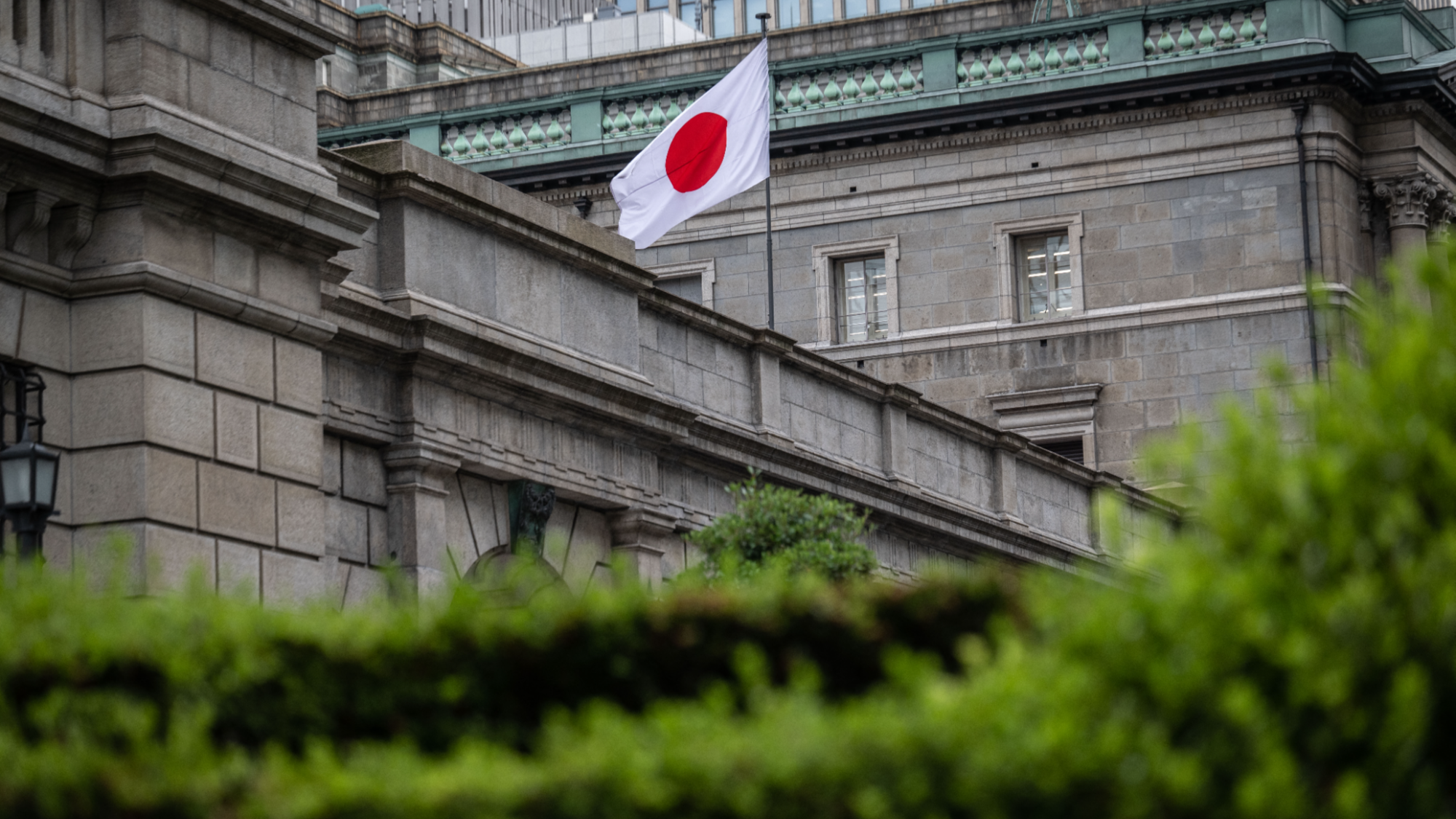
Japan’s central bank is navigating a challenging economic landscape as surging government bond yields threaten to disrupt its policy normalization process.
The Bank of Japan (BOJ) must decide whether to continue raising rates, risking even higher yields and slowing economic growth, or hold — and possibly cut — rates to support expansion that could further fuel inflation.
Soaring Government Bond Yields
Over the past month, Japanese government bonds (JGBs) have reached multi-decade highs.
On Thursday, the 10-year JGB yield climbed to 1.917%, the strongest level since 2007.
Meanwhile, the 20-year yield hit 2.936%, a level unseen since 1999, and the 30-year yield surged to 3.436%, marking a record high according to LSEG data.
Japan ended its yield curve control (YCC) program in March 2024, which had capped 10-year yields at around 1%, as part of broader policy normalization that also concluded the world’s last negative interest rate regime.
Inflation and Economic Pressures
Inflation has exceeded the BOJ’s 2% target for 43 consecutive months, creating additional pressure as the country considers raising interest rates.
Anindya Banerjee, head of currency and commodities at Kotak Securities, warned that a return to quantitative easing or YCC to cap yields could weaken the yen and increase imported inflation.
Rising bond yields raise borrowing costs, intensifying fiscal pressures in a country with the world’s highest debt-to-GDP ratio of nearly 230%, according to the International Monetary Fund.
Stimulus and Debt Concerns
Japan’s government is preparing its largest stimulus package since the pandemic to curb living costs and support the economy.
Magdalene Teo, head of fixed income research for Asia at Julius Baer, noted that new debt issuance to fund Prime Minister Sanae Takaichi’s supplementary budget totals 11.7 trillion yen, 1.7 times the amount issued by her predecessor in 2024.
“This highlights the difficulty the government faces in balancing economic stimulus initiatives with maintaining fiscal sustainability,” Teo said.
Global Implications of Rising Yields
In August 2024, a hawkish BOJ rate hike and weak U.S. economic data triggered a global sell-off, with Japan’s Nikkei falling 12.4% — its worst day since 1987.
The unwinding of yen-funded carry trades, where investors borrow in low-interest-rate yen to invest in higher-yielding assets, was a key factor in the sell-off.
Currently, rising Japanese yields have narrowed the Japan-U.S. rate gap, raising concerns about another round of carry trade unwinds.
Analysts See Limited Risk of Repeat Crisis
Experts say a repeat of the 2024 market turmoil is unlikely.
Masahiko Loo, senior fixed income strategist at State Street Investment Management, explained that structural flows, including retail allocations from pensions, life insurance, and tax-exempt NISA accounts, anchor foreign holdings and limit large-scale repatriation.
Justin Heng, APAC rates strategist at HSBC, noted that Japanese investors remain net buyers of foreign bonds.
Between January and October 2025, Japanese investors purchased 11.7 trillion yen in overseas debt, outpacing the 4.2 trillion yen bought in all of 2024.
Heng added: “We expect the continued decline in hedging costs, as a result of further Fed rate cuts, will also likely encourage Japanese investors to take more foreign bond exposure.”
Balancing Growth and Fiscal Stability
The BOJ faces the delicate task of managing interest rates to support growth while containing inflation and ensuring fiscal sustainability.
Analysts warn that continued volatility in Japanese bond yields could influence both domestic borrowing costs and global financial markets.
The coming months will be critical for Japan’s economic trajectory, as policymakers navigate rising yields, high debt, and ongoing inflationary pressures.