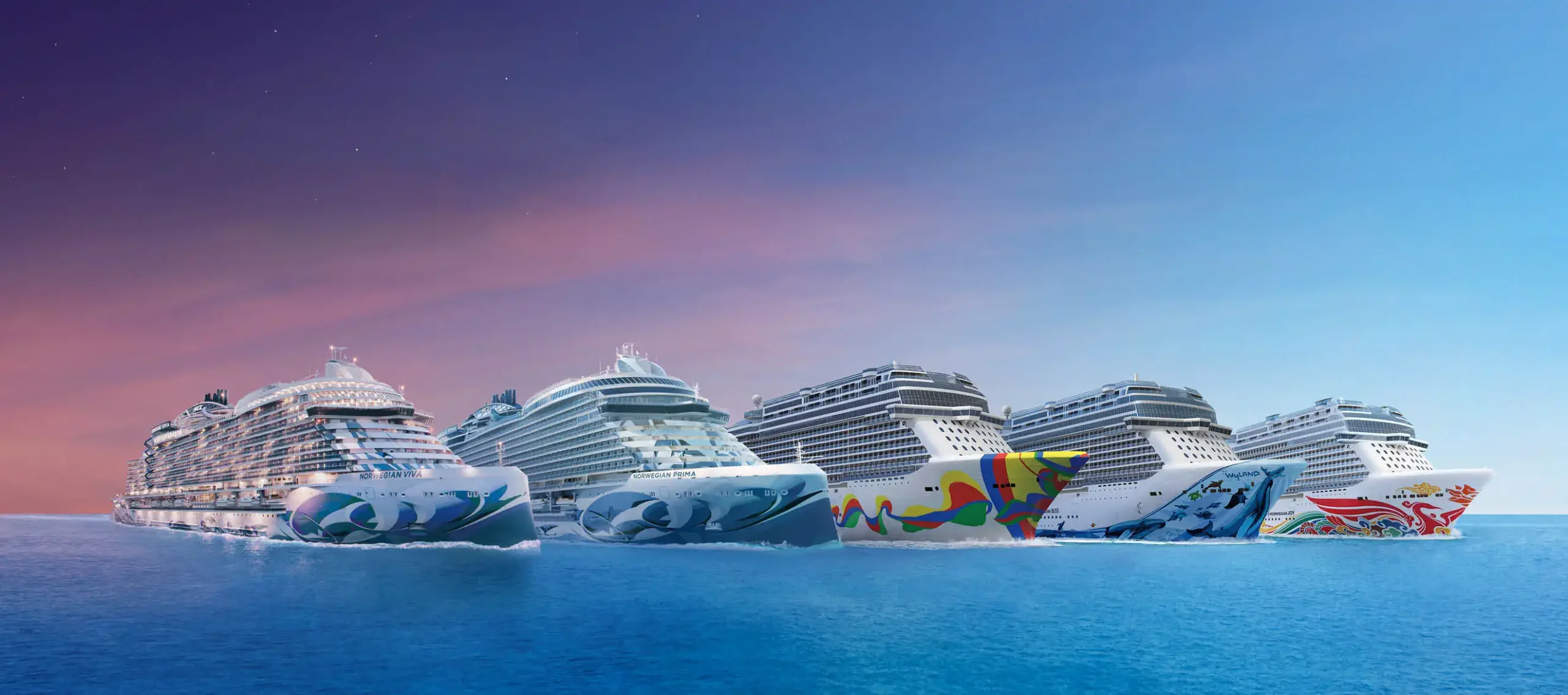
Norwegian Cruise Line Holdings (NASDAQ: NCLH) delivered a mixed first-quarter report that produced a meaningful earnings beat but sent the stock lower by approximately 9% in morning trading after the company cut its full-year profit guidance and signalled that geopolitical headwinds were weighing on European bookings and itinerary planning.
The result illustrated the sharp contrast between individual company fundamentals and the macro pressures that the Hormuz crisis has been imposing on consumer travel behaviours across the globe.
Adjusted EPS came in at $0.23 for the quarter, significantly ahead of the $0.15 consensus, a beat of 53% that would in normal circumstances be cause for a rally. Revenue of $2.3 billion missed the $2.36 billion estimate by about 2.5%, however, and the company’s revised full-year guidance projecting a 3% to 5% decline in net yield was what moved the stock. Full-year EPS guidance was cut to a range of $1.45 to $1.79, a substantial reduction that reflects both elevated fuel costs, directly traceable to the Iran war’s impact on global crude prices, and weaker bookings in EMEA markets.
Management pointed to execution missteps in the delivery of some Caribbean itineraries as a secondary factor alongside the macro headwinds, acknowledging the combination made for a difficult quarter to assess clearly. The company also disclosed investments being made in its Great Stirrup Cay destination, including a new water park expected to open in late summer 2026, framing this as a demand driver that should yield returns in the second half and beyond.
The gap between the earnings beat and the market’s negative reaction captures a broader dynamic that has been a recurring theme across Q1 2026 earnings. Companies in consumer discretionary travel categories are generating reasonable near-term numbers from forward bookings made when the macro environment was more stable, but forward guidance is increasingly pressured by the combination of elevated fuel costs, consumer caution around discretionary spending, and uncertainty about whether Iran-related disruptions will intensify or abate. Norwegian’s cut to its net yield forecast is a concrete expression of that uncertainty, translating geopolitical anxiety into a company-specific financial impact that the market found more significant than the Q1 beat.