The US military is scaling its counter-drone arsenal at pace, and L3Harris Technologies (NYSE: LHX) has just secured the contract to prove it. The Naval Surface Warfare Center Indian Head Division has awarded L3Harris Fuzing and Ordnance Systems of Cincinnati, Ohio an initial $48.5 million deal to produce proximity fuzes for the Advanced Precision Kill Weapon System, with options that could push the total value to $98.4 million if fully exercised.
The contract represents a significant step in the Pentagon’s effort to field a cost-effective answer to the growing threat posed by unmanned aerial systems. Rather than expending expensive guided missiles worth hundreds of thousands of dollars on drone targets that can cost a fraction of that amount, the military is betting on upgraded rockets as a more sustainable solution.
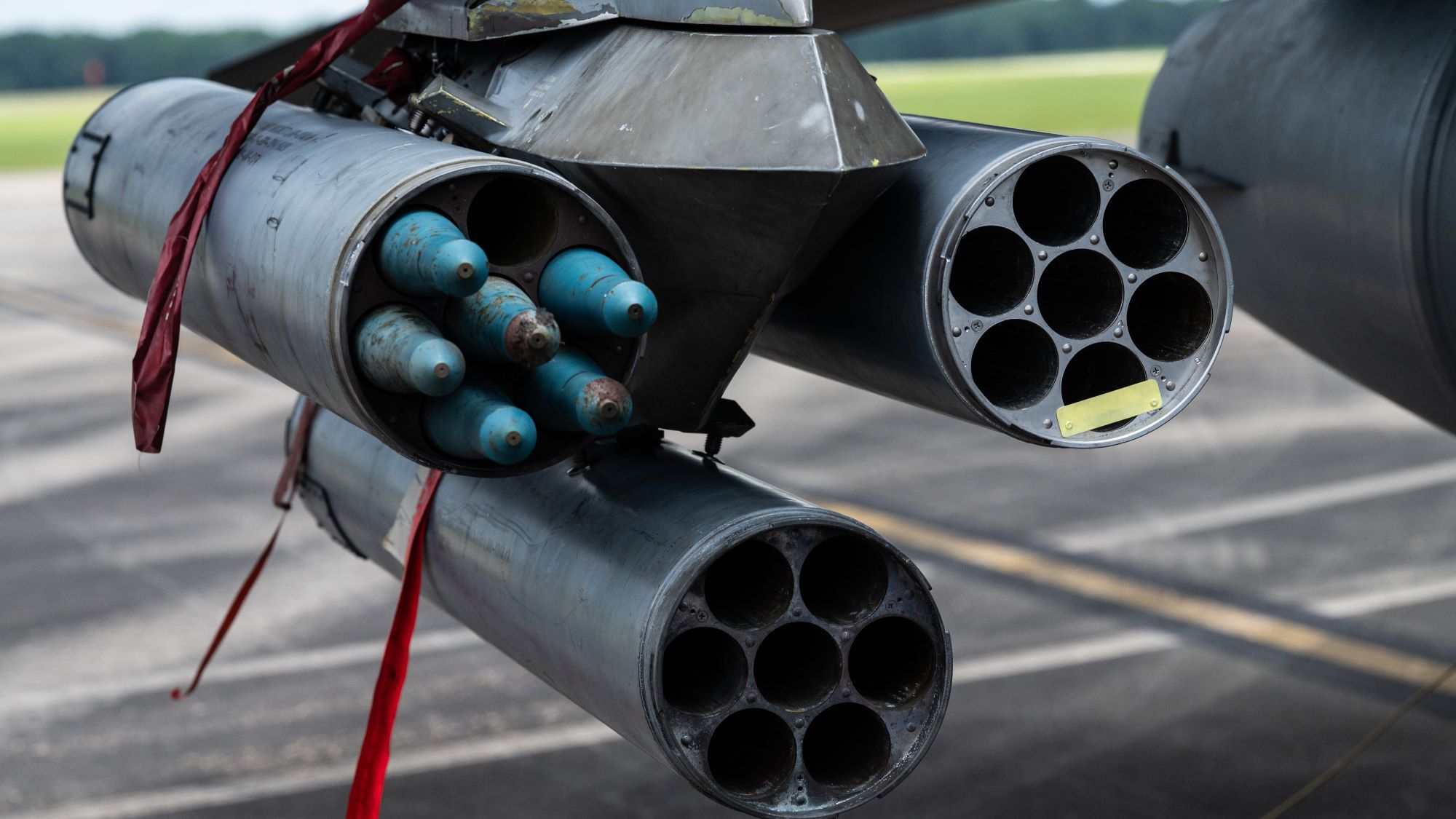
The APKWS itself is a guidance kit that converts unguided 2.75-inch rockets into precision weapons. The proximity fuze upgrade enhances those rockets further, allowing them to detonate near a target rather than requiring a direct hit. The configuration also incorporates a Long Wave Infrared seeker alongside laser guidance, enabling the rocket to continue tracking a target after launch without constant laser designation from the operator.
The results from testing have been striking. The Joint Counter-Small Unmanned Aircraft Systems Office completed a demonstration at Yuma Proving Ground in Arizona in which the APKWS rockets equipped with L3Harris proximity fuzes recorded 100 percent effectiveness against Group 3 drones. That category covers larger unmanned aircraft typically flying above 1,200 metres at speeds exceeding 185 kilometres per hour. The outcome from those trials was what directly triggered the follow-on production contract now being awarded.
Rather than going through a competitive bidding process, the deal was awarded directly to L3Harris as a follow-on to prototype development completed under a separate Other Transaction Agreement, reflecting the urgency with which the Pentagon wants to see the capability fielded. Production is scheduled to continue through September 2028.
Funding for the programme reflects growing buy-in across multiple branches of the US armed forces. Roughly 68 percent of the financing flows from Air Force ammunition procurement accounts, with the Navy and Marine Corps contributing around 28 percent. The Marine Corps is also integrating the air-to-air APKWS variant onto legacy F/A-18C/D Hornet aircraft as part of Aviation Plan 2026, seeking to expand counter-drone capacity while preserving its more expensive missile inventories.
The proximity fuze technology is not limited to aircraft. L3Harris has also adapted the system for its Vehicle-Agnostic Modular Palletized ISR Rocket Equipment platform, known as VAMPIRE, which pairs sensors and APKWS launchers into a mobile ground-based counter-drone system. VAMPIRE units deployed to Ukraine in 2023 demonstrated the same proximity-fuzed rocket concept in combat conditions against Russian drone attacks.
The broader industrial picture around L3Harris and its rocket business has been shifting rapidly. In January, the Pentagon signed a letter of intent to invest $1 billion and take an equity stake in the company’s solid rocket motor division, pending congressional approval. That division is now being spun out as a standalone entity, with an initial public offering targeted for the second half of 2026. L3Harris is also investing $1.3 billion to expand solid rocket motor manufacturing capacity at its facilities in Orange County, Virginia, establishing what the company describes as an advanced propulsion campus.
The APKWS proximity fuze contract, while smaller in scale, sits within that much larger strategic picture of the US rapidly building out its low-cost counter-drone capabilities at the production level.