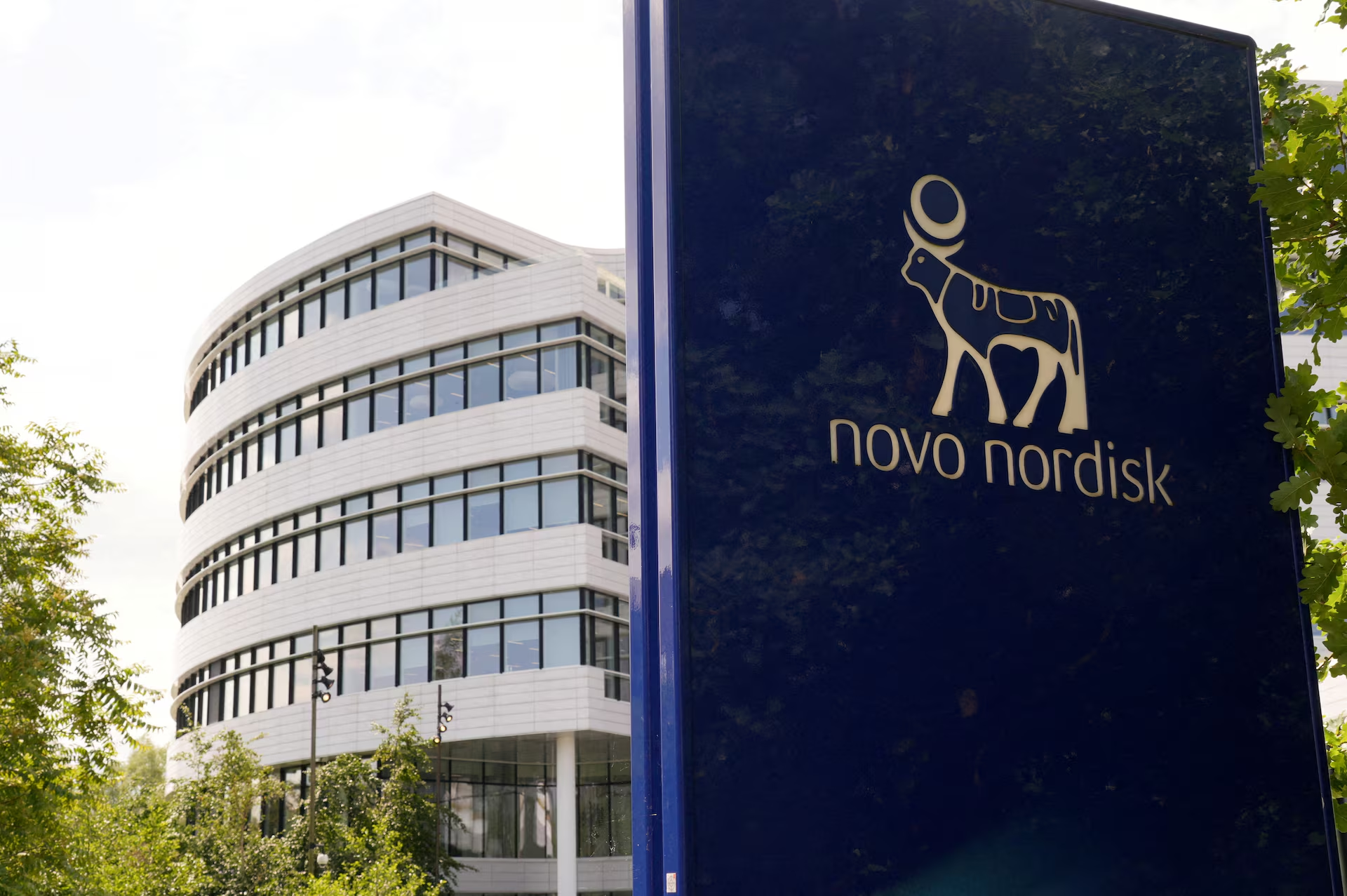
Novo Nordisk (NYSE: NVO) has seen its shares lose roughly 68% of their value over the past two years, despite operating in a rapidly growing market.
The chronic weight management drug market has expanded significantly in recent years, with analysts projecting that growth to continue well into the next decade.
Novo Nordisk is widely considered one of the leading players in this space, making its prolonged stock decline a puzzling development for many investors.
The Denmark-based pharmaceutical giant initially rode strong momentum behind Wegovy, its anti-obesity medicine that once posted incredibly rapid sales growth and even faced supply shortages due to demand.
Competition from Eli Lilly’s (NYSE: LLY) Zepbound began eroding that momentum, as Zepbound posted better weight-loss efficacy results in clinical trials against Novo Nordisk’s treatments.
Novo Nordisk’s next-generation weight-loss medicine, CagriSema, failed to meet management’s projected 25% mean weight loss in a phase 3 study and proved inferior to Zepbound in a head-to-head trial.
The clinical setbacks were compounded by worsening financial results, with Novo Nordisk adjusting its guidance downward multiple times in 2025 and expecting revenue to decline for fiscal year 2026.
Despite these headwinds, the company launched an oral formulation of Wegovy that is proving extremely popular and attracting a large number of brand-new patients who were previously hesitant to begin treatment.
Novo Nordisk is also developing Amycretin, a single molecule that mimics two gut hormones, GLP-1 and amylin, which could offer better efficacy and easier manufacturing than CagriSema, and is currently in phase 3 studies.
Another candidate, UBT251, targets three distinct gut hormones and has shown highly promising phase 2 results in China, potentially giving Novo Nordisk additional firepower against competitors in the weight-loss space.
The company’s deep pipeline across diabetes and weight loss, combined with its manufacturing capabilities, gives it a significant advantage over most of its peers in what remains a rapidly growing market.