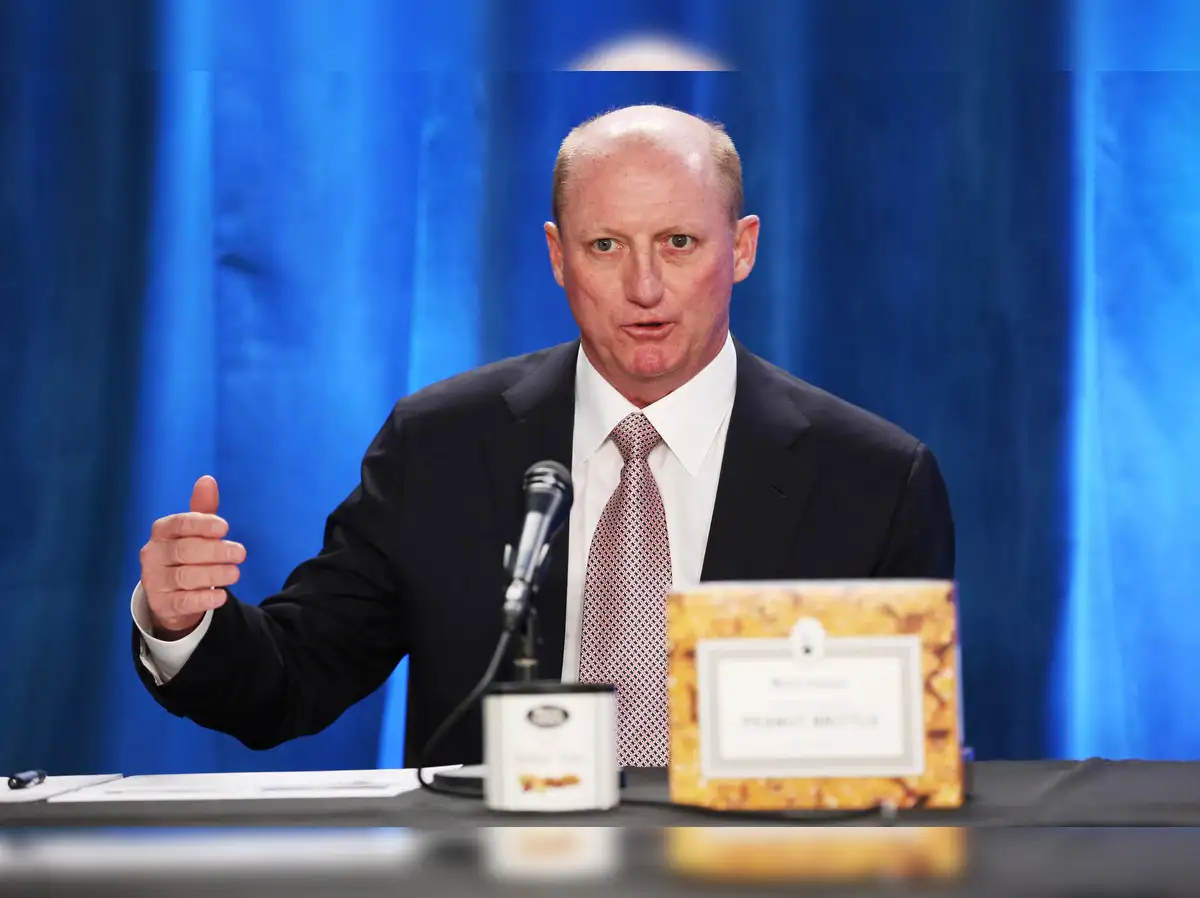
Berkshire Hathaway (NYSE: BRKA)(NYSE: BRKB) has long been synonymous with Warren Buffett, whose decades of stock-picking success earned him the title “the Oracle of Omaha.”
The company’s story shifted in 2026 when Greg Abel formally took over as CEO, but new reporting suggests Buffett’s influence over investment decisions remains very much intact.
Buffett told CNBC “I initiated it” in reference to Berkshire Hathaway’s recent purchase of Alphabet (NASDAQ: GOOG) shares, a significant disclosure that caught the attention of investors and analysts alike.
While Buffett stepped down as CEO at the end of 2025, he did not fully retire, instead transitioning to the role of president of the board, which makes him Abel’s direct superior.
That structural arrangement means Buffett remains available to guide the company, particularly on the investment side, even as Abel manages day-to-day operations.
The emerging division of responsibilities between the two men is becoming clearer, with Abel handling strategic operational decisions and Buffett steering major stock investments.
Abel made the call on Berkshire Hathaway’s acquisition of Taylor Morrison Home, a move he believes will allow the company to consolidate its homebuilding-related businesses into a unified operation.
That type of decision reflects an operational mindset, while the Alphabet stock purchase represents the kind of capital allocation move Buffett has long been known for.
At its core, Berkshire Hathaway is an insurance company, and the division of duties taking shape under Abel actually mirrors how most traditional insurers are structured and run.
In a standard insurance model, management focuses on running the business while a dedicated investment team handles the portfolio, which is essentially the structure Berkshire now appears to be adopting.
Buffett’s foundational insight was that he could use insurance float, the premiums held while waiting to pay out claims, to invest more aggressively in stocks than most insurers would dare to do.
That approach built one of the most successful conglomerates in Wall Street history, but Buffett’s management style as CEO was famously hands-off on the operational side.
That hands-off approach may have left room for improvement across Berkshire’s vast collection of operating businesses, creating a meaningful opportunity for Abel to add value as a more operationally focused leader.
The split now forming between what Abel and Buffett each contribute could prove to be a defining feature of this next chapter for Berkshire Hathaway rather than a sign of uncertainty or transition friction.
If this model holds, Berkshire will increasingly resemble a traditional insurance company in structure, which analysts suggest would not necessarily be a negative outcome for long-term shareholders.