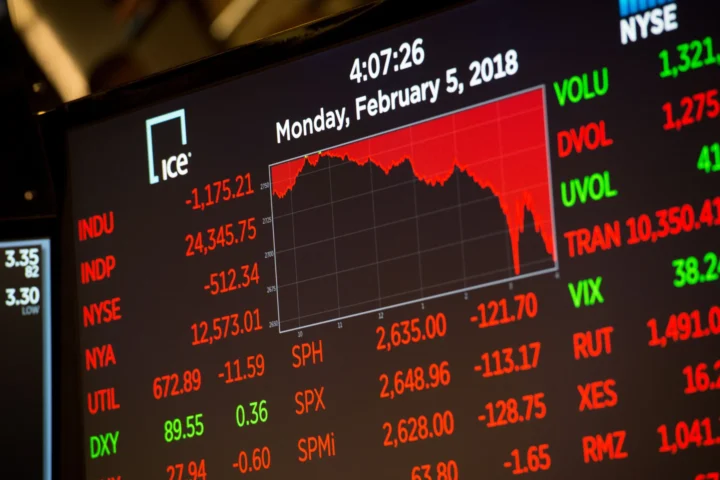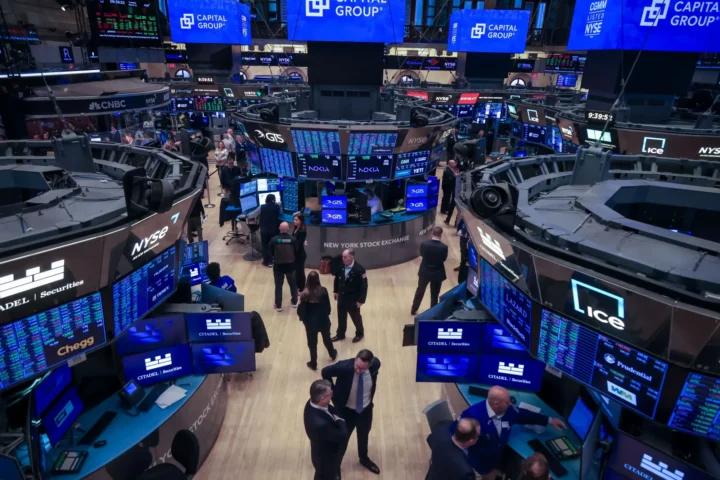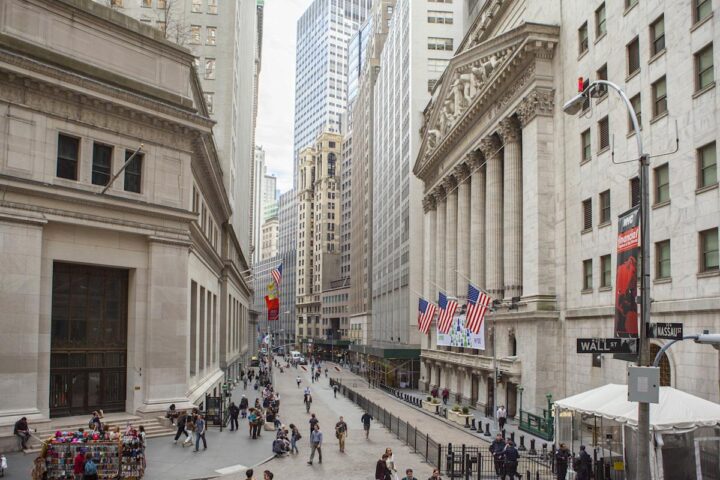
British and European stocks extended losses on Friday after a tanker was struck by an unknown projectile in the Strait of Hormuz, rattling already fragile markets.
Saudi Aramco (2222.SR) told European refiners they will receive no crude allocations next month, deepening fears the U.S.-Iran war is tightening its grip on global oil supply.
The FTSE 100 fell 1.5%, having climbed as high as 10,823 on Thursday before Friday’s sharp slide erased those gains.
Despite the selloff, the FTSE 100 remained broadly flat over the last week, supported by a strong rally earlier in the session.
Germany’s DAX (^GDAXI) dropped 1.6% and France’s CAC 40 declined 1.5%, with selling pressure felt broadly across the continent.
Telecoms, retail, and insurers were the biggest drags, with BT Group (BT-A.L), Vodafone, Next, Entain, and Airtel Africa among the sharpest fallers, alongside insurers Legal & General, Prudential, and Aviva, and banks Barclays and Lloyds.
The UK Maritime Trade Operations confirmed the strike sparked a fire on board the vessel that has since been extinguished, with all crew reported safe, urging ships to transit the strait “with caution.”
The incident follows Iran’s Revolutionary Guard Corps’ claim that it struck a Togo-flagged tanker attempting an “illegal passage” through the strategically vital waterway.
Aramco told at least two European refining customers they would receive no crude next month after the kingdom’s East-West pipeline was attacked, though the line is reportedly due to partially restart within days and fully return within six weeks.
Speaking to Axios on Thursday, President Trump raised the prospect of sharply escalating the conflict, saying of Iran: “Do I want to go in and annihilate them, or do I not? It’s a big decision. Anything could happen with me.”
In a separate interview with ABC 11, Trump said Tehran was “not ready” for a deal, adding: “We’re gonna either make a deal that’s good, or we’re not gonna make a deal at all.”
A senior UN official told the Security Council the conflict has cost Arab economies about $150 billion in its first month, roughly 4% of regional GDP.
Italy said it will deploy warships to the Bab al-Mandeb strait without waiting on a joint EU decision, signalling growing unilateral action from European nations.
The Bank of England on Thursday held rates and overhauled its quantitative tightening framework, pausing all gilt sales until April 2027 and removing bonds maturing after 2049, around £120 billion, from active sales.
Britain’s retail sales volumes rose 0.5% in August, well above the consensus forecast of a 0.2% decline and reversing a 0.5% fall in July, according to the Office for National Statistics.
The Bank of Japan raised its benchmark rate by 25 basis points in a 7-2 vote overnight, with analysts reading the two dissenting votes as a dovish signal ahead of Governor Kazuo Ueda’s scheduled press conference.
Mohit Kumar, chief economist at Jefferies, said: “For now, we are constructive. Improving geopolitical tensions should help both the rates and the equities markets. Hence, yesterday we initiated a long position in 5Y rates.”
Kumar added: “We continue to have a bullish bias on equities and credit. Our view remains that central banks are not going to deliver on the forwards, and we would be looking at potentially one hike from the Fed and ECB.”
Brent crude was last down a more modest 0.34% at $104.46, while WTI turned positive, rising 1.13% to $103.07, reflecting volatile sentiment around supply disruptions.
Gold extended gains with spot prices up 0.58% to $4,366.91 and futures up 0.14% to $4,405.72, as haven demand persisted, while silver jumped 1.45% to $67.04.