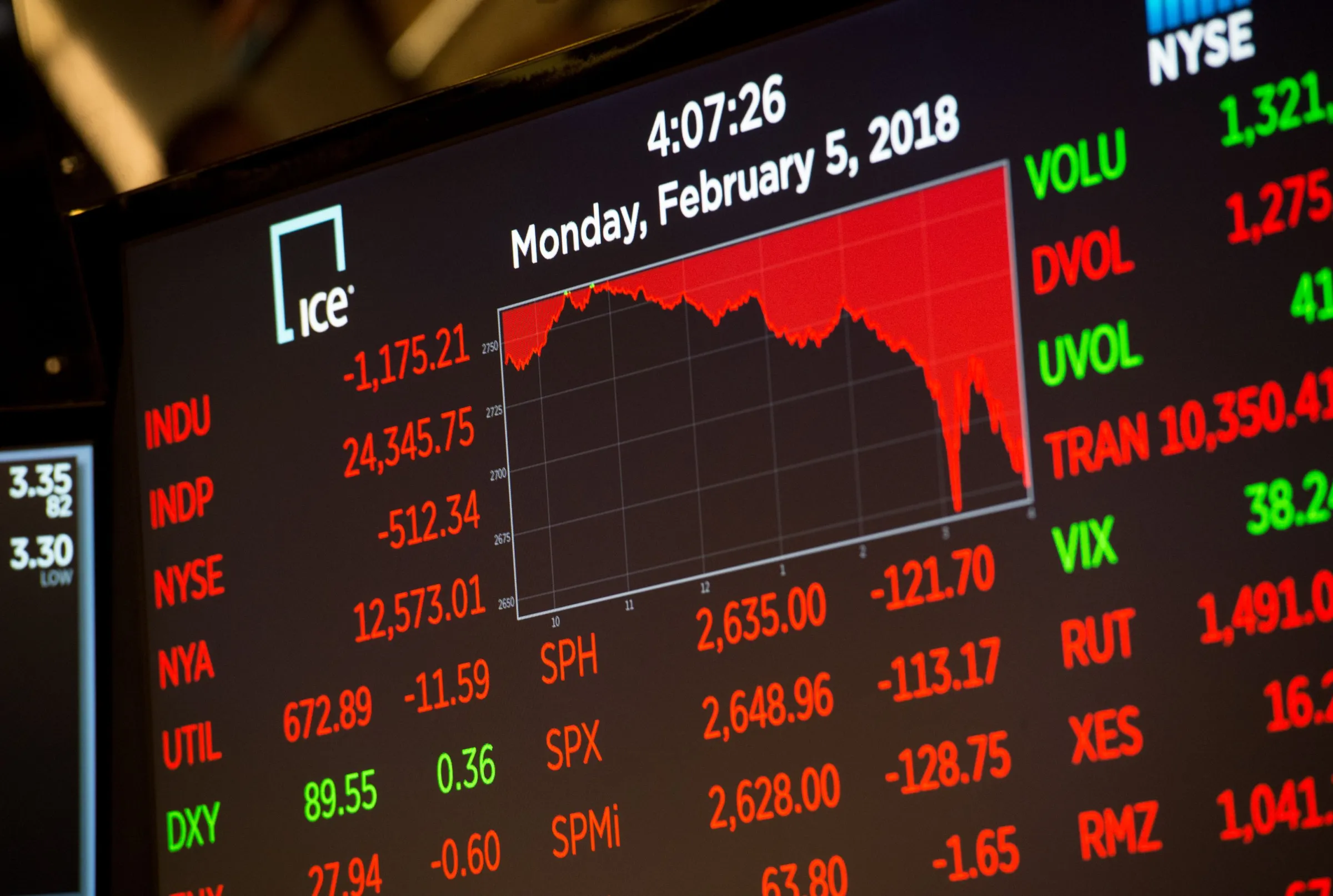
European stocks closed lower on Wednesday as oil prices reversed five consecutive days of losses, rattling investor confidence across the continent.
Uncertainty surrounding the reopening of the Strait of Hormuz emerged as a key driver behind the sudden reversal in crude oil prices.
Brent crude futures had earlier tumbled to $94.08 a barrel before recovering sharply to trade above $101 a barrel later in the session.
Iran’s President Masoud Pezeshkian said Tehran would never “bend at the knee” in response to external pressure, escalating geopolitical tensions following remarks made at the UN General Assembly.
Pezeshkian also blamed the US and Israel for global instability, adding further uncertainty to the outlook for Middle Eastern oil supply routes.
The pan European Stoxx 600 shed 0.44%, with Germany’s DAX and France’s CAC 40 falling 0.66% and 0.39% respectively, while the UK’s FTSE 100 edged down just 0.03%.
In the UK market, miners led the declines, with Fresnillo dropping 3.5%, Endeavour Mining falling 2.6%, and Antofagasta losing 2.5% on the day.
JD Sports Fashion fell 5.7%, while AutoTrader Group and IG Group Holdings ended lower by 3.3% and 3.1% respectively amid broad selling pressure.
Energy stocks bucked the negative trend, with BP and Shell rising 2.75% and 2% respectively as higher oil prices boosted sentiment in the sector.
In Germany, Scout24 ended more than 5% lower, while Rheinmetall climbed more than 3.5% and SAP gained 2.3% against the broader market weakness.
France’s Teleperformance jumped more than 5% and EssilorLuxottica surged 3.75%, standing out as strong performers in an otherwise subdued French session.
Flash survey data from S&P Global showed Germany’s composite output index climbed to 53.8 in September from 51.8 in August, the highest reading since October of the previous year.
Germany’s services Purchasing Managers’ Index hit a 7-month high of 52.9, well above the forecast of 49.9, signalling robust expansion in the sector.
France’s composite output index rose to 51.2 in September from 48.5 in August, while the services PMI hit a 10-month high of 51.4, up sharply from 48.0.
The Eurozone’s flash composite output index came in at 53.1 for September, improving from 52.0 in August and pointing to continued regional economic momentum.
UK data told a more cautious story, with the composite PMI easing to 51.7 in September from 52.5 the prior month, slightly missing market expectations of 52.0.
Austria, Belgium, Czech Republic, Denmark, Finland, Greece, Ireland, Netherlands, Norway, Poland, Portugal, Spain and Sweden all closed in negative territory for the session.
Iceland, Russia and Türkiye managed to end the day higher, bucking the broader trend of weakness seen across European markets.