The Brazil iGaming ban matters well beyond Brazil. For two years the country was the industry’s biggest growth story. Now it is the biggest case study in regulatory risk. A licence no longer guarantees stability, and operators, suppliers and investors will reassess every newly regulated market because of it.
What the Brazil iGaming Ban Covers
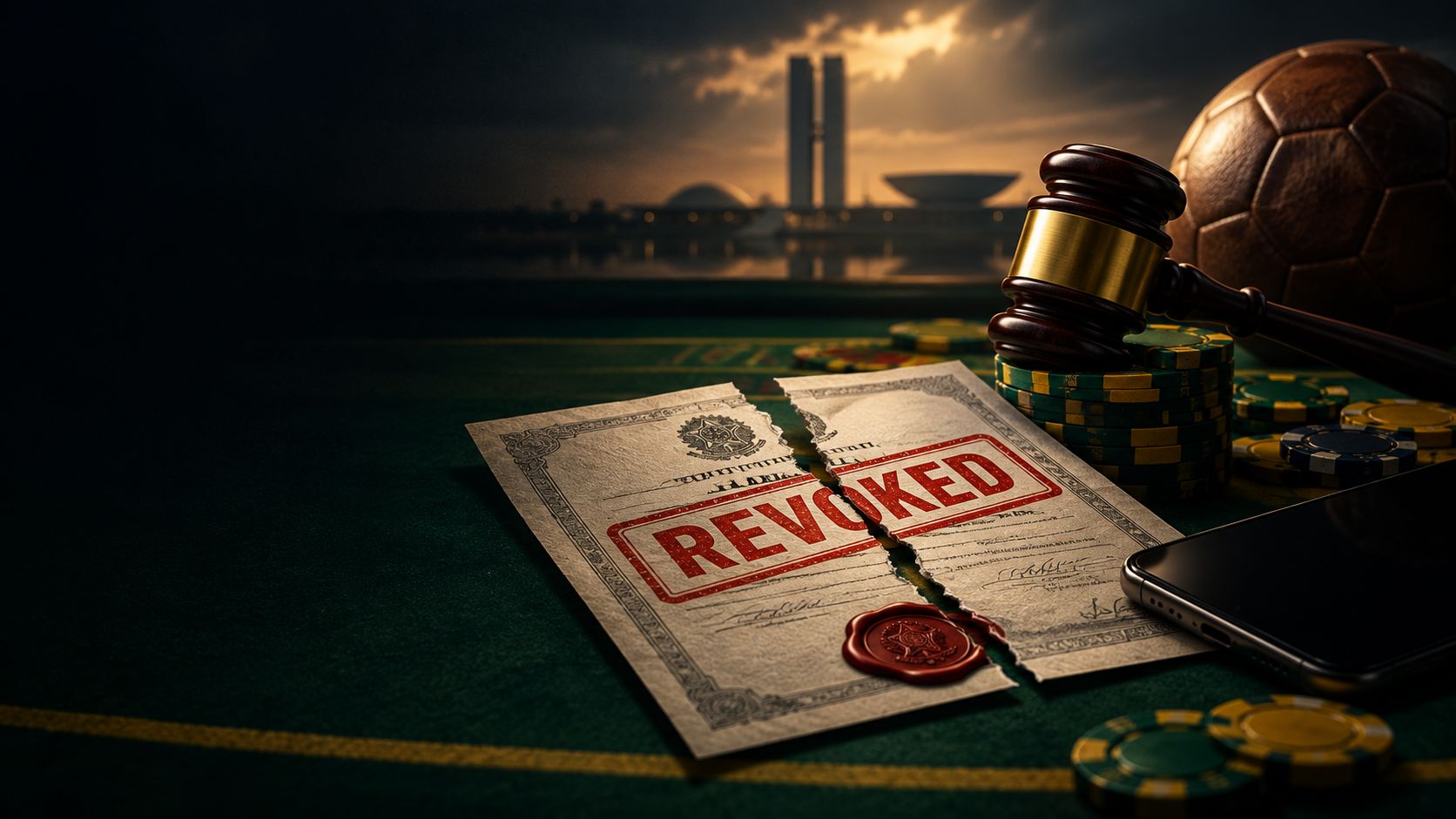
On 25 September, President Luiz Inácio Lula da Silva signed Provisional Measure (MP) 1.394. It prohibits fixed-odds betting, which includes sports betting and online casino. Operating, offering, intermediating and advertising these products are all banned, including services offered from abroad.
The dates:
- 25 September: the measure took effect on publication. Licensed operators stopped taking new deposits.
- 5 October, 23:59: deadline for players to withdraw their balances, now passed.
- 6 October: licensed websites and apps must be offline.
- 25 October: all authorisations end, 30 days after publication.
The licences were issued for five years. The measure denies operators any refund or compensation for their investment or lost profits. Banks and payment institutions may no longer process betting transactions, except to close accounts and return funds. App stores and internet platforms also get enforcement duties.
The Scale of the Loss
Brazil’s regulated market opened in January 2025 and reached about 25 million players in its first year. It generated about $5.7bn in revenue. Licensed operators paid about $411m in taxes between January and August 2026. Each of the 85 companies paid R$30m, roughly $5.8m, for its licence, so the government collected about R$2.55bn in fees. It keeps all of it, although the licences end less than two years after the market opened, inside terms of five years.
Listed groups have quantified the hit. Flutter expects to lose about $70m in revenue and $20m in adjusted EBITDA this year, and carries $539m of goodwill, $127m of customer relationships and $124m of trademarks tied to its Brazilian business. Entain, the owner of Ladbrokes and Sportingbet, cut its 2026 online net gaming revenue growth forecast to between 4% and 6%. Allwyn, which holds 36.75% of Kaizen Gaming, the operator of Betano, said its 37% adjusted EBITDA margin guidance no longer applies if the measure stays.
Who Is Hit Outside Brazil
The Brazil iGaming ban reaches well past the licence holders. Other operators with Brazilian licences face the same question: what the market was worth in their 2026 plans. Suppliers are exposed too. Playtech, Kambi and Evolution all describe Brazil as an important part of their business, and their customers there no longer hold licences.
The ban also covers advertising and sponsorship, and branding had to come down from physical and digital media by 5 October. Football clubs and esports teams that sold sponsorships to betting brands lose a revenue source. Affiliates are hit as well: advertising and intermediation are banned, so traffic aimed at Brazil has no licensed buyer left, and affiliates paid by revenue share lose that income when the licences end.
Who gains is harder to answer. The one clear beneficiary is the federal treasury, which keeps the licence fees and owes operators nothing under the measure. Reporting so far shows no commercial winner.
What the Industry Learns
Licences Carry Political Risk
The Brazil iGaming ban came less than two years after launch, and five-year licences gave no protection against a decree. Boards and investors can now put three questions to any newly regulated market:
- Can the government end licences by executive decree, or only by law?
- Are licence fees refundable if it does?
- Is there a transition period beyond a few weeks?
In Brazil the answers were decree, no and 30 days. On 2 October, the government’s own lawyers at the Attorney General’s Office went further and asked the Supreme Federal Court to declare the core of the two laws behind the regulated market unconstitutional, reversing the office’s earlier defence of them.
One Market Should Not Carry the Business
The Brazil iGaming ban shows two business models side by side. Operators that built their growth plan around one fast-growing market take the full loss when it closes. Global platforms spread across many jurisdictions, such as the crypto casino Shuffle, can absorb the closure of any one market as a manageable risk. A decree can only take the share of revenue that one regulator controls.
Responsible Gambling Protects the Licence
A fast-growing market draws political attention. KYC, age checks and spending limits do not guarantee that a licence survives, but weak ones give a government an easy argument for ending it.
What Comes Next
Congress has 120 days to approve the measure. The clock pauses during recess, so the final vote could fall in early 2027, with the Congress elected on 4 October. At the Supreme Federal Court, Justice Luiz Fux is rapporteur for the challenges, including the one filed by the industry association ANJL (ADI 8027). His 72-hour deadline for the Attorney General’s Office to respond ran out around 5 October, so the court can now rule. Until Congress or the court acts, the 25 October date stands. Operators in other markets will watch both for what they say about licence security.