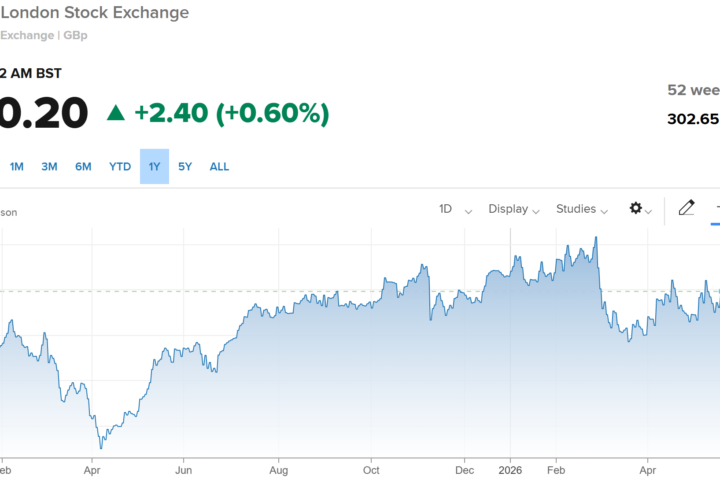
When a stock falls 8% in a single trading session, most investors run for the exit, yet that reaction may have created a genuine buying opportunity in Investec (LSE: INVP).
The Anglo-South African bank and wealth management firm saw its shares collapse after releasing half-year results that, on the surface, appeared to disappoint the market.
Yet buried inside those results was a 7.4% rise in adjusted earnings per share, a figure that tells a very different story from what the share price movement implied.
The sell-off pushed Investec’s price-to-earnings ratio down to just seven, placing it firmly among the cheapest financial stocks currently listed on the FTSE.
The real source of investor anxiety was a squeeze on margins, with costs rising sharply and the UK segment recording a 2.7% earnings decline amid fierce competitive pressure.
However, management appears to be spending deliberately, directing capital toward new hires and technology upgrades intended to drive long-term efficiency gains that could begin materialising around 2028.
Investec is targeting a return on equity of 16% by 2030, compared with the 13.5% it delivers today, and with peak capital expenditure expected this year, profit acceleration could follow as soon as next year.
The second low-P/E name worth examining is JD Sports Fashion (LSE: JD.), the sportswear retailer whose P/E of 7.9 reflects a business navigating a difficult trading environment.
Established store sales declined 2.6% in the three months through October, with management pointing to ageing product lines from key brand partners and aggressive discounting across the broader market.
The financial consequences are significant, with full-year profit guidance now set between £700m and £750m, a sharp retreat from the £852m the group reported in the prior year.
North America, JD Sports’ largest market, showed some tentative signs of recovery, as the third-quarter sales decline of 1.3% compared favourably against the 6% drop recorded in the second quarter.
The retailer also continues to generate substantial cash, remaining on track to produce roughly £520m in free cash flow during the current financial year, giving management meaningful room to manoeuvre.
That said, JD Sports’ recovery depends heavily on consumer appetite for trainers and sportswear rebounding, a variable that sits largely outside management’s direct control.
Low P/E ratios are a useful screening tool, but investors who stop there risk walking into what market veterans call a value trap, where a stock is cheap precisely because its problems are structural.
Applying that lens, Investec’s spending surge looks more like a calculated growth investment than a sign of distress, lending its discounted valuation a more credible bull case.
JD Sports, by contrast, needs external market conditions to shift before its earnings trajectory can meaningfully reverse, making its recovery timeline harder to predict with confidence.
For investors comfortable with the risks attached to each, both stocks offer entry points that are rare for established FTSE names, though Investec’s clearer pathway to margin recovery gives it the edge.