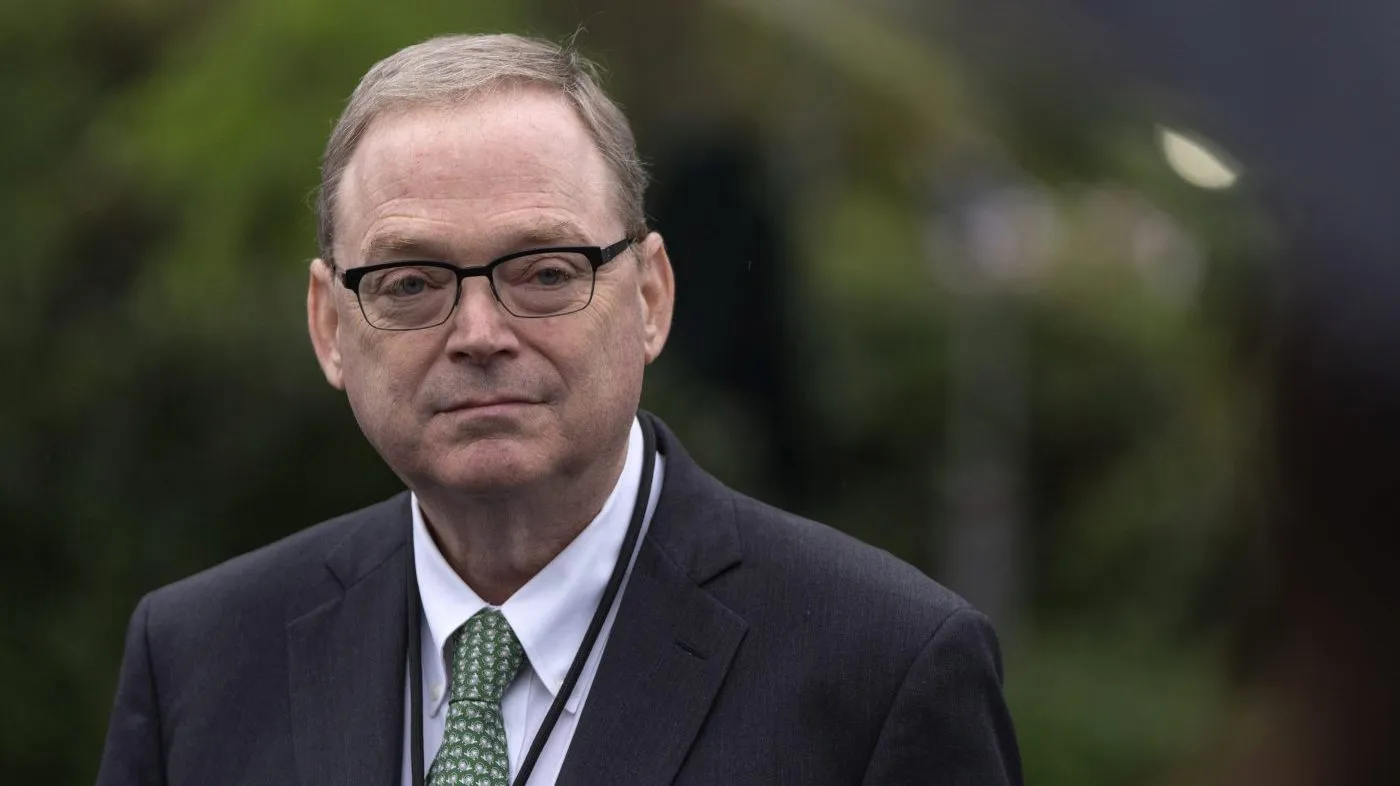
National Economic Council Director Kevin Hassett has criticised the Federal Reserve for not cutting interest rates fast enough, even as the US economy posts stronger-than-expected growth figures.
Speaking on Tuesday, Hassett argued that global economic conditions and technological change justify a quicker pace of rate reductions.
US economic growth expanded at an annualised rate of 4.3% in the third quarter, well above the 3.2% forecast from economists surveyed by Dow Jones.
Hassett said a significant portion of that growth was linked to trade policy.
He claimed that 1.5% of the expansion resulted from President Donald Trump’s tariffs reducing the US trade deficit.
AI, Inflation, and Global Comparisons
Hassett also pointed to the rapid expansion of artificial intelligence as a factor reshaping the economic outlook.
He said the AI boom is driving productivity gains while simultaneously easing inflationary pressures.
“If you look at central banks around the world, the U.S. is way behind the curve in terms of lowering rates,” Hassett told CNBC during a “Money Movers” interview.
The Federal Reserve cut interest rates by a quarter point on December 10, marking its third reduction this year.
However, policymakers signalled that future cuts could come more slowly than markets had anticipated.
Divisions Inside the Federal Reserve
The latest decision revealed growing divisions within the Fed.
Three governors voted against the quarter-point cut, the highest number of dissents since 2019.
After the meeting, Fed Chair Jerome Powell described the decision as a “close call,” underlining internal uncertainty about the appropriate pace of easing.
Hassett’s comments have attracted attention partly because he is viewed as a leading contender to succeed Powell when the chair’s term ends in May.
Some Fed watchers have raised concerns that Hassett may be too closely aligned with the president.
Independence and Political Pressure
President Trump has repeatedly criticised the Fed for not lowering rates more aggressively.
Last week, he said he would soon announce his nominee for the next Fed chair, stressing that he would choose “someone who believes in lower interest rates by a lot.”
In a prime-time address focused on affordability, Trump highlighted economic pressures facing households.
Despite strong headline growth, public confidence appears muted.
A CBS News/YouGov poll published Sunday showed Trump’s approval rating on the economy at 37%.
When asked about the disconnect between economic data and public sentiment, Hassett suggested perception plays a major role.
“In the end, it turns out that I think it has a lot to do with news coverage and how people are processing, their glimpse of the outside world,” he said.