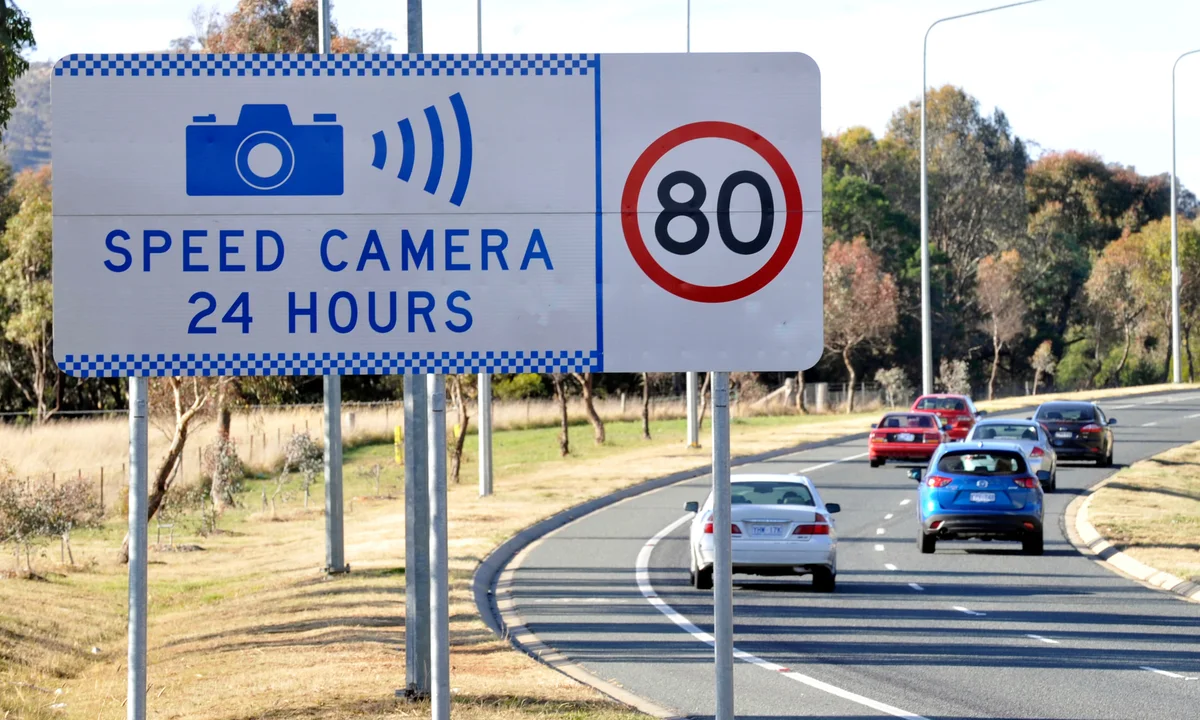
Australian police will often only issue a speeding ticket if you exceed the legal limit by 10%, but this is not a hard rule.
Speeding is one of the most common traffic offences in Australia, and many drivers often wonder whether they will only receive a fine if they go over the speed limit by a certain margin, such as 10% or more. While this belief is widespread, the reality is more complex, as enforcement policies vary between states and territories, and tolerance levels are not a legal right.
Understanding Speed Limits And Enforcement In Australia
Australian speed limits are designed to improve road safety, reduce accidents, and manage traffic flow efficiently. Exceeding the posted limit can result in fines, demerit points, licence suspensions, or in extreme cases, criminal charges.
Many drivers assume minor breaches are tolerated, often referencing a 10% buffer over the speed limit. However, there is no federal law in Australia allowing drivers to legally exceed speed limits by any percentage without consequence. The 10% figure often cited refers only to practical enforcement discretion, not a legal allowance.
- Each Australian state and territory sets its own rules and enforcement practices.
- Police may exercise discretion in issuing fines for minor breaches, but there is no guaranteed margin.
- Even small amounts over the speed limit can technically result in a ticket if detected.
State And Territory Variations
Speeding enforcement in Australia differs across jurisdictions. Here is a closer look:
- New South Wales (NSW): Police often allow a minor tolerance for radar inaccuracies, but enforcement can occur from 1 km/h over the limit. In practice, tickets are commonly issued from about 10 km/h above the limit, but this is guidance rather than a legal threshold.
- Victoria (VIC): Victoria Police sometimes allow a 2–3 km/h tolerance, mainly to account for speedometer error. Officially, any speed above the limit is a breach.
- Queensland (QLD): Queensland uses automated cameras and police monitoring. Small over-limit driving may go unpunished, but exceeding the limit by even a few km/h can result in a fine.
- Other states and territories: Similar discretionary approaches exist in South Australia, Western Australia, Tasmania, the Northern Territory, and the Australian Capital Territory, but none have a legally mandated 10% allowance.
Key Points About Speeding Enforcement In Australia
- No legal right to exceed the limit by 10% exists.
- Tolerance margins are primarily for instrument or measurement inaccuracies.
- Enforcement depends on police discretion and state-specific guidelines.
Why Tolerance Exists
Australian authorities may incorporate tolerance margins for practical reasons:
- Speedometer inaccuracies: Vehicles may display speeds that differ slightly from actual speed.
- Detection device calibration: Radar, laser, and camera systems have small margins of error.
- Resource prioritisation: Police may focus on significant speeding offenders rather than minor breaches.
Even with tolerance, drivers cannot rely on a 10% buffer. A police officer has the authority to issue a fine if the measured speed exceeds the posted limit, regardless of any informal margin.
Penalties For Speeding In Australia
The consequences of speeding vary depending on how far a driver exceeds the limit and the state or territory in which the offence occurs. Common penalties include:
- Fines: Monetary penalties increase with the severity of the breach. Minor excesses may incur smaller fines, while high-speed offences can be substantial.
- Demerit points: Points accumulate on a driver’s licence, with higher points potentially leading to suspension.
- Licence suspension or disqualification: Severe or repeated offences can result in temporary or permanent loss of driving privileges.
- Insurance impact: Speeding offences may affect premiums and insurability.
Practical Tips For Drivers
To avoid fines and demerit points, Australian drivers should:
- Assume any amount over the speed limit is an offence.
- Regularly check and calibrate speedometers.
- Use caution in areas with high-speed enforcement or automated cameras.
- Understand specific state or territory rules for tolerance and penalties.
Practical Takeaways
- Never rely on a 10% over-limit buffer as a legal defence.
- Fines and demerit points can apply even for minor breaches.
- State-specific tolerance guidelines exist, but they are discretionary.
- Safety should always take priority over speed.
Automated Enforcement And Police Monitoring
Australia uses a mix of fixed speed cameras, mobile cameras, and radar devices to detect speeding offences. These systems are calibrated to measure speed accurately and account for minor device discrepancies, but the margin is small and not a guaranteed exemption.
Police officers may also conduct manual speed checks using radar or pacing, and they have discretion in whether to issue fines for slight breaches. Nevertheless, the principle remains that speeding is illegal the moment you exceed the posted limit.
The Bottom Line For Australian Drivers
While some states may apply informal tolerance for minor breaches, there is no legal threshold permitting drivers to exceed the speed limit by 10% without risk of a ticket. Driving over the speed limit, regardless of the margin, exposes drivers to fines, demerit points, and other penalties.
Summary Of Key Points
- Legal speed limit exceedance does not exist in Australia.
- Discretionary tolerance is primarily for measurement and instrument inaccuracies.
- Tickets can be issued even for minimal excesses.
- Penalties include fines, demerit points, licence suspension, and insurance consequences.
- Drivers should always follow the posted speed limit for safety and legal compliance.
- Driving above the speed limit is always an offence.
- Tolerance levels are only practical guides, not legal rights.
- Enforcement and penalties vary by state, but risk is universal.
- Maintaining safe speeds benefits both legal compliance and road safety.