The United Kingdom’s annual inflation rate eased to 3% in January, meeting forecasts and marking the lowest level recorded since March 2025 according to newly released official statistics.
Economists had widely predicted the decline from December’s 3.4% figure, reinforcing the view that price pressures across the economy are gradually losing momentum after an extended period of stubbornly elevated levels.
Core inflation, which excludes volatile categories including food, energy, alcohol and tobacco, slipped slightly to 3.1% after standing at 3.2% during the previous month.
What Drove The Slowdown
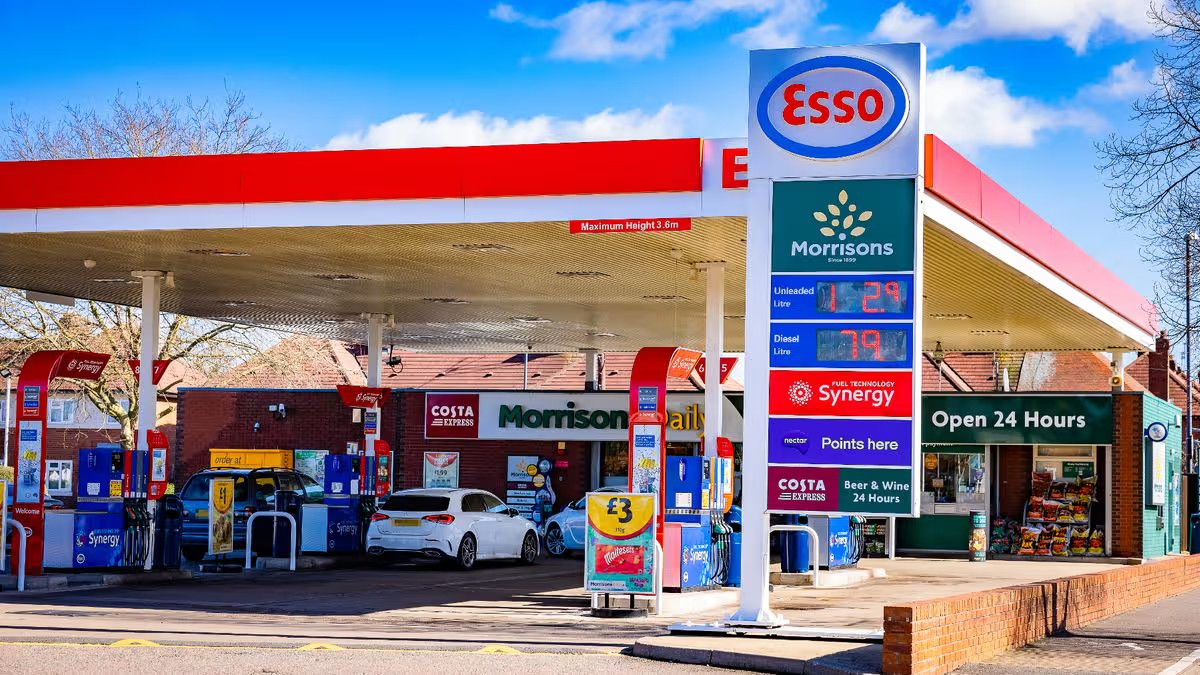
Officials attributed the moderation primarily to falling petrol costs and a reduction in airline ticket prices after seasonal increases in late December.
“Airfares were another downward driver this month with prices dropping back following the increase in December. Lower food prices also helped push the rate down, particularly for bread and cereals and meat. These were partially offset by the cost of hotel stays and takeaways,” noted ONS chief economist Grant Fitzner.
Currency markets showed limited reaction, with sterling trading broadly unchanged against the dollar near $1.3562 immediately after the data publication.
Bank Of England Watching Closely
The figures arrive at a critical moment for policymakers attempting to confirm whether inflation will fall close to the Bank of England’s 2% target by April.
Recent employment data has strengthened the case for easing monetary policy, showing unemployment rising to 5.2% in December, the highest reading recorded in five years.
Wage growth also weakened across the final quarter of 2025, suggesting underlying inflationary pressure within services sectors may be cooling after several persistent years of increases.
Weak Growth Strengthens Rate Cut Case
Economic growth has remained fragile, with output expanding only 0.1% during the fourth quarter, adding pressure on policymakers to support activity through looser financial conditions.
Market participants now expect a reduction from the current 3.75% benchmark interest rate at the Bank’s March meeting if incoming data confirms continuing disinflation.
“Sticky inflation has been the Achilles’ heel for the UK for a number of years, requiring the Bank of England to keep interest rates restrictive. But it appears that we have finally turned a corner,” said Zara Nokes.
“Today’s data showed a meaningful step down in headline inflation, with broad-based disinflation across sectors. Crucially, this progress should continue with headline inflation likely to fall in touching distance of the 2% target by April.”
“The recent moderation in wage growth should also help to keep all-important services inflation – which has been a thorn in the Bank of England’s side for a number of years – at bay.”
Analysts increasingly expect multiple reductions this year, potentially bringing rates toward 3% if economic weakness persists and inflation continues declining steadily.
Market Expectations Shift
Economic commentators argue the combination of weaker labour conditions and slow growth has significantly raised expectations for immediate policy easing.
“It has also increased expectation that rates could reach as low as 3% by the end of the year,” said Danni Hewson.
Investors will now monitor upcoming business activity surveys for confirmation that inflation is falling without triggering a deeper economic slowdown across the United Kingdom.