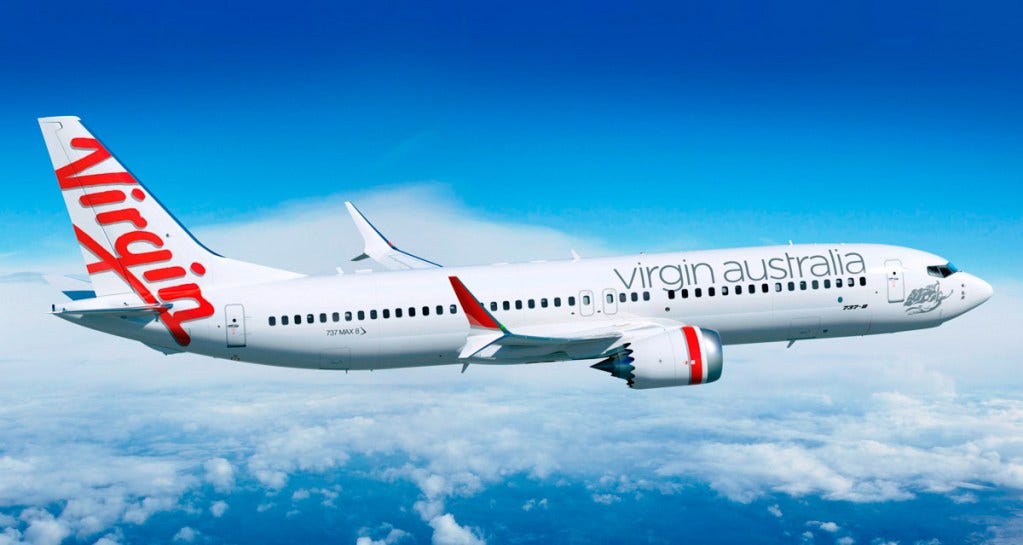
Virgin Australia delivered a robust first-half financial performance, underscoring its disciplined expansion strategy as it navigates a domestic aviation market long dominated by Qantas Airways.
The airline reported a 21% increase in underlying net profit after tax to A$278.7 million, reflecting improved margins and sustained passenger demand across its network.
Revenue climbed 9.3% during the period, while revenue per available seat kilometre rose 6.4%, outperforming broader industry growth metrics and highlighting firmer pricing power.
By contrast, Qantas recorded revenue growth of 6.3% and average RASK expansion of 3.2% across its domestic and international operations, illustrating divergent commercial dynamics between the two carriers.
Virgin’s measured growth plan appears central to that performance, with the airline deliberately moderating capacity additions despite buoyant demand conditions.
Capacity Strategy Signals Competitive Caution
Chief executive Dave Emerson acknowledged that Virgin would scale back domestic capacity growth to between 2% and 3% in the second half ending June 30.
“This year, we’re growing more in line with GDP, and (Qantas) are growing faster than us,” Emerson said during the earnings call.
“But if you look at over a two-year basis, I think our growth rates would be quite similar.”
Qantas has signalled it will maintain domestic capacity growth of roughly 4% at both its flagship airline and Jetstar operations in the same period.
Citi analyst Samuel Seow noted that Virgin’s slower expansion trajectory appears aimed at sustaining pricing strength rather than pursuing market share gains aggressively.
“This trend appears to continue into 2H26, with higher RASKs and lower capacity than competitors,” Seow wrote in a research note.
“However, this isn’t impacting profitability with guidance largely in line/modestly ahead.”
Rising Costs Challenge Industry Margins
Despite the encouraging profit momentum, Virgin faces mounting operational costs that continue to pressure airlines globally.
Maintenance expenses rose 30% in the first half, driven largely by supply-chain bottlenecks and additional lease provisions for certain aircraft that will not recur later this year.
Chief financial officer Race Strauss attributed part of the increase to delivery delays for new aircraft, forcing carriers worldwide to operate ageing fleets requiring heavier upkeep.
“Obviously with the delay in the new aircraft (deliveries), that is pushing all airlines around the world to use older aircraft, which creates more maintenance demand,” Strauss said.
Airport charges also increased 14%, reflecting substantial infrastructure investment programs undertaken by Australia’s major airports.
“This is an industry-wide issue, and is set to continue into the second half and beyond, as monopoly airports continue to invest a significant amount of money in capital works, which drives up costs for airlines,” Strauss said.
Strauss maintained confidence that strong travel demand and ongoing cost-efficiency initiatives would support further margin expansion despite persistent inflationary pressures.
Virgin’s shares were largely unchanged in afternoon trading, while Qantas gained 2.2% following a volatile week that included a sharp post-results decline.
The results underline Virgin’s strategic pivot since its Bain Capital-backed rescue during the pandemic and subsequent return to public markets, positioning it as a leaner competitor in Australia’s concentrated aviation landscape.