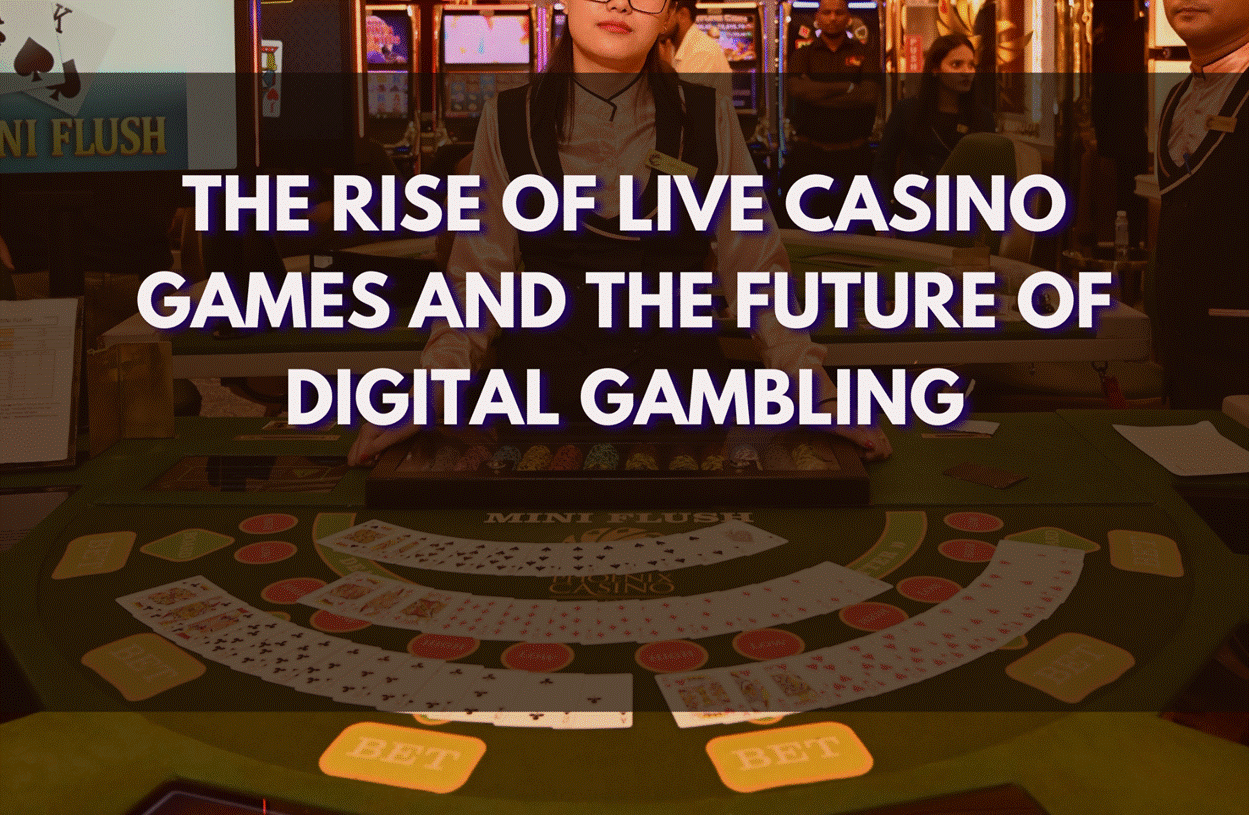
Live casino games have become one of the clearest signs of where the industry is heading. Players still want speed and convenience, but many now also want games that feel more visible, social, and believable. A live table with a real dealer gives them that in a way that standard digital casino games do not.
That shift matters because it shows that the future of digital gambling is not only about faster software or bigger game libraries. It is also about trust, presentation, mobile access, and a stronger sense of involvement. Live casino sits right at the point where those things meet, which is why it has moved into the mainstream.
What Live Dealer Games Are and How They Work
Live dealer games are online casino games run by real dealers in real time. Instead of getting an instant computer-generated result, players join a streamed table and watch the action happen on screen. The most common formats are blackjack, roulette, and baccarat, though many casinos also offer poker variants and game show-style titles.
From the player’s side, the process is simple. You enter a live table, place your bet during a short betting window, and then watch the dealer handle the cards or wheel. In the background, studios use cameras, streaming systems and game tracking software to send results to the casino interface almost immediately. That is what makes a good live table feel smooth and easy to follow.
Live dealer gaming started to take shape in the mid 2000s, when streaming technology became strong enough for real-time play. It grew much faster once broadband improved, and mobile play became normal. That history matters because it shows why live casino is now a major part of online gambling rather than a novelty.
Why Live Casino Has Grown So Quickly
Standard RNG games are convenient, but they can feel distant. Live casino changes that by showing the table, the dealer, and the game flow in real time. Players can watch cards being dealt, see the roulette wheel spin, and use live chat during play. That makes the experience easier to follow and often easier to trust.
Technology has made this smoother than it was a few years ago. High definition streaming, OCR, AI support, and faster mobile connections have reduced delay and made the screen display feel more immediate. At the same time, suppliers have widened the product range beyond blackjack, roulette, and baccarat, adding game shows and localised formats for different regions and languages.
The business numbers also show that live casino is now a core product. Evolution, the largest specialist supplier in this space, ended 2025 with more than 1,700 live tables. Its year-end reporting also showed live revenue far ahead of RNG revenue in the fourth quarter, which underlines how central live products have become to major operators.
What Makes Live Casino Different in Practice
For players, the biggest difference is pace. RNG games are instant and endless. Live games move at the speed of a real table, which changes how people play and how long they stay engaged. Some players prefer that because it feels calmer and more deliberate. Others like the social side, especially in blackjack, roulette, and game show formats, where the host becomes part of the experience.
Another practical difference is cost and access. Live games often have higher minimum bets than RNG titles. Busy tables can also fill up, and free demos are much less common because dealers, studios, and streaming infrastructure cost real money to run. That means players need to be more selective before they join.
What Players Should Check Before Joining a Live Table
A good live casino experience depends on more than a glossy stream. Before signing up, players should look at a few basics that make a real difference.
- Check the licence first, then look at the provider. Well-known live suppliers and clear regulation usually tell you more than a flashy welcome bonus.
- Look at payment methods and withdrawal speed before you deposit. A live table can feel premium, but poor cash-out terms can still ruin the overall experience.
- Review the game range properly. A casino with one roulette table and one blackjack stream is very different from a site with multiple stake levels, languages, and game show options.
- Test the site on mobile if that is how you play most often. Live casino now depends heavily on smooth mobile performance, and poor optimisation is still a practical problem for some operators.
For many players, a website like clashofslots is useful at this stage because it gives context before any money is spent. That matters when you need to compare licences, software, payment options, complaints, withdrawal terms, and the actual range of live games rather than just reading a bonus banner on a casino homepage.
What Live Casino Reveals About the Wider Market
The rise of live games points to a bigger change in digital gambling. Operators are no longer competing on volume alone. They are competing on experience. That includes sharper studio production, better hosts, more local language tables, tailored interfaces, and products that feel closer to entertainment than old-style online casino menus. Game shows are the clearest example because they mix casino mechanics with television-style presentation.
It also shows that mobile now shapes product design from the start. Industry reporting in 2024 described mobile gambling as taking roughly 90 to 95 percent share in some contexts, and live products are now built around that reality.
What Comes Next
AI is already being discussed as a tool for personalisation, customer support, fraud detection, and responsible gambling monitoring. The more realistic short-term future is not a fully automated live casino. It is a hybrid model where human dealers remain central but are supported by better data, faster tools, and more personalised table recommendations.
A few changes look especially likely over the next few years.
- More personalisation will shape what players see first, including table speed, stake level, and recommended formats.
- More regional customisation will appear through language options and local game variants.
- More responsible gambling tools will be built into live products in real time instead of sitting quietly in account settings.
VR and AR may become more relevant later, but they still look like a developing layer rather than the main story today. The real growth drivers are mobile performance, trusted streaming, broader content, and clearer player information.
Final Thought
Live casino games matter because they show what players now expect from digital gambling. They want convenience, but they also want clarity. They want variety, but they also want confidence in what they are seeing. The operators that do best in the next phase will not simply add more games. They will make the whole experience easier to understand, easier to trust, and easier to use on the devices people already play on every day.