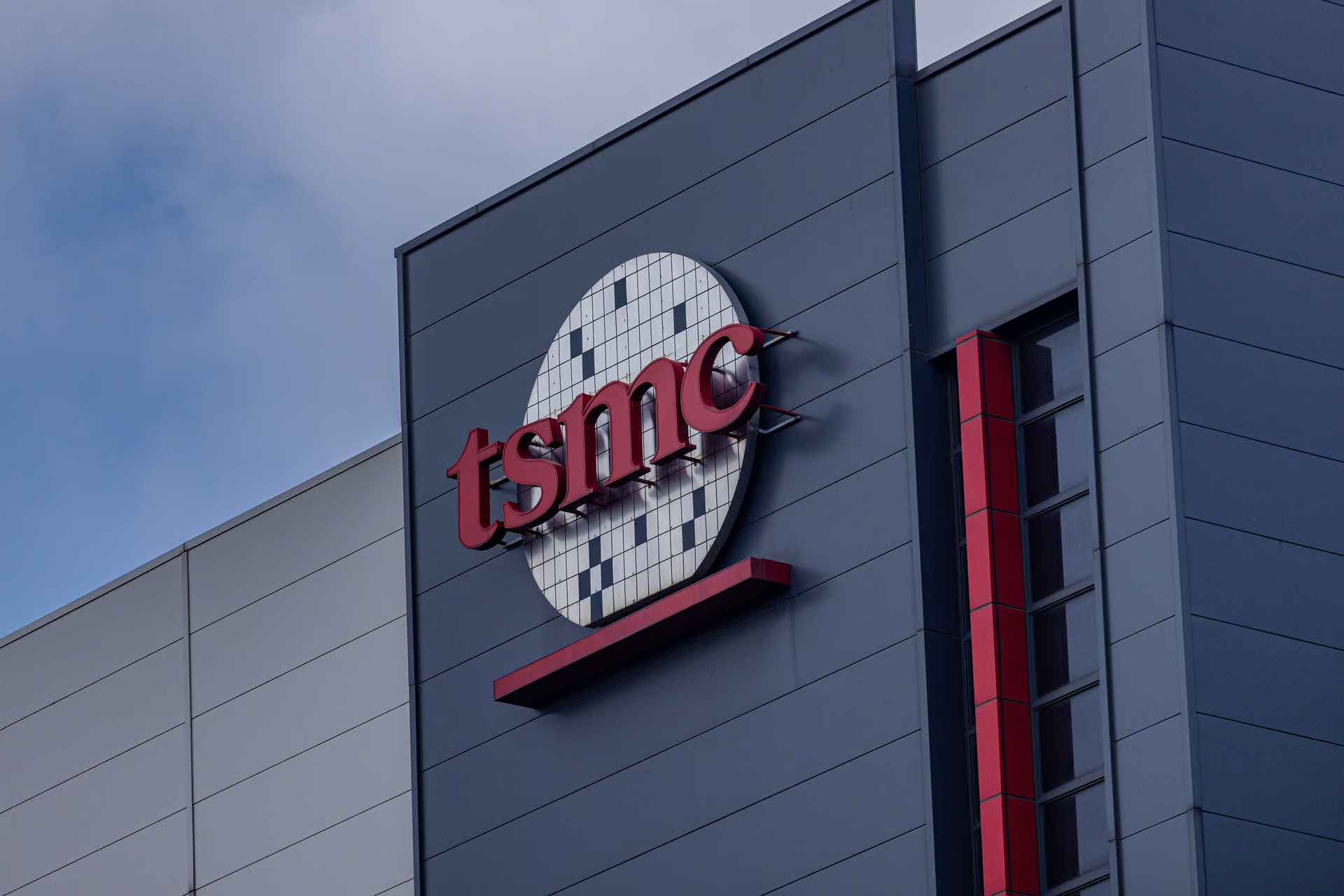
Taiwan Semiconductor Manufacturing Company delivered first-quarter revenue of $35.6 billion, a 35% year-on-year surge that crushed analyst estimates and reinforced the company’s position as the single most consequential beneficiary of the ongoing global AI infrastructure spending wave.
The headline figure dropped on Friday morning and sent shares up 2% in premarket trading, with investors interpreting the beat as confirmation that demand from TSMC’s most important clients, including Nvidia, Apple and a growing list of custom silicon designers, is running well ahead of what the market had priced in.
Analysts are projecting gross margins could hit 64% when full quarterly earnings are released on April 16, a level that would be exceptional by any standard and reflects aggressive price increases on the most advanced cutting-edge chip nodes where TSMC has essentially no competition. The company’s monopoly on the world’s most advanced processors gives it extraordinary pricing power in a market where its customers have nowhere else to go.
The AI infrastructure investment cycle that began in earnest in 2023 has shown no signs of slowing. Nvidia’s continued dominance in AI accelerator chips, combined with Amazon, Google, Meta and Microsoft all designing increasingly powerful custom silicon, means foundry capacity at the 2nm and 3nm nodes remains sold out well in advance. TSMC’s order books tell the story more vividly than any analyst projection.
TSMC’s success stands in sharp contrast to broader semiconductor market dynamics, where the PC segment remains sluggish and memory chip pricing has been volatile.
The company’s ability to isolate its results from those cyclical pressures by concentrating on advanced AI and mobile workloads is a strategic achievement that justifies its premium valuation.
Full earnings on April 16 will offer additional colour on guidance for the remainder of 2026 and any commentary on supply constraints or geopolitical risk, with Taiwan’s complex relationship with China remaining a persistent background variable that institutional investors monitor carefully even as the company’s financial performance continues to exceed expectations.