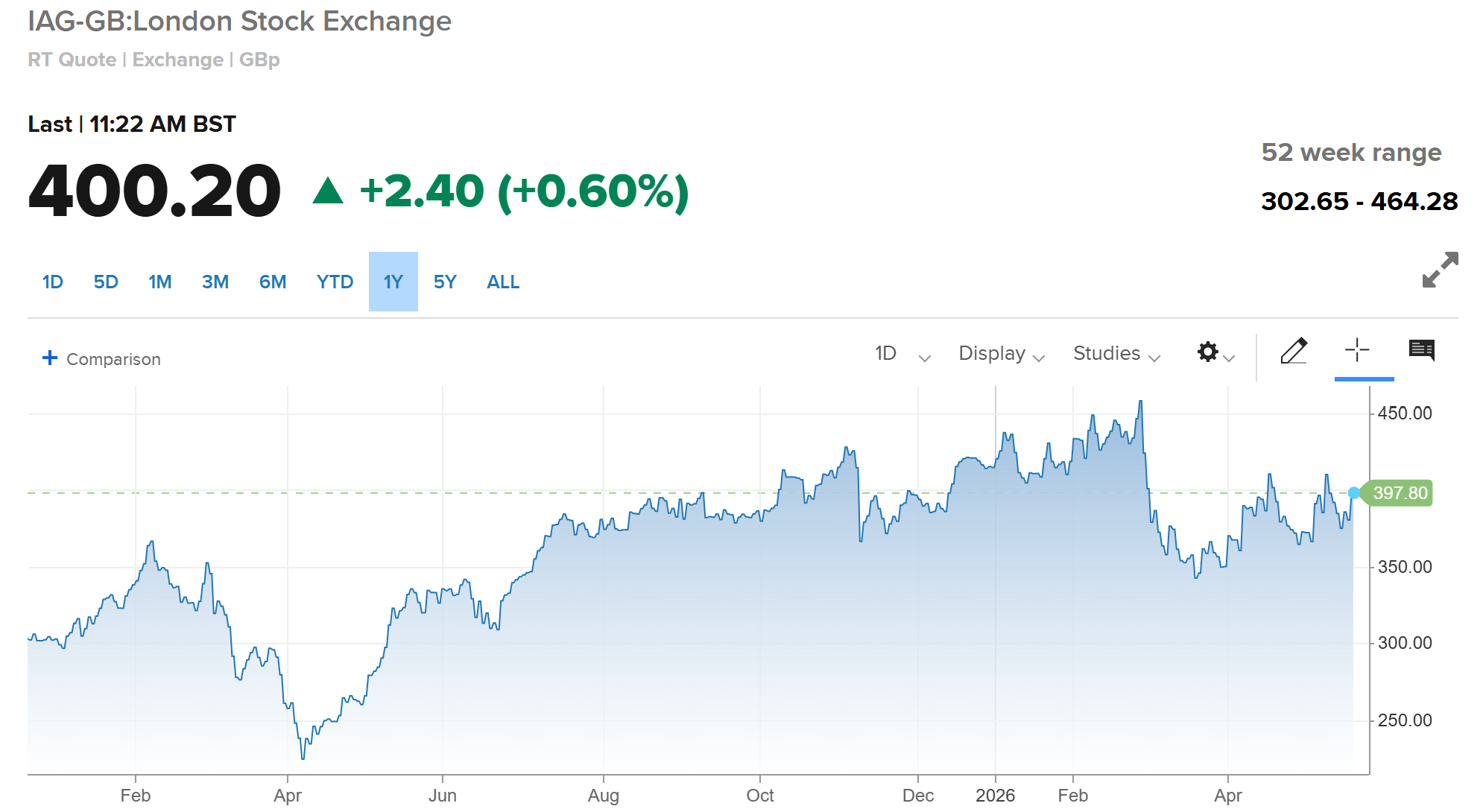
International Consolidated Airlines Group (LSE: ICAG) closed Wednesday at 380.62p, with the stock trading in a tight intraday range between 378.70p and 382.60p. The session reflected ongoing caution among investors as the British Airways and Iberia parent navigates a turbulent macro backdrop dominated by rising jet fuel costs and escalating Middle East conflict risk.
The close of 380.62p compared to a previous session finish of 380.20p, with shares sitting within a 52-week range of 302.70p to 464.10p. That wide annual spread illustrates just how much ground IAG has surrendered from its 2025 highs, when the stock was trading comfortably above the 430p mark and testing resistance levels not seen since before the pandemic.
Wednesday’s flat close came just two weeks after the group delivered its first-quarter 2026 earnings update, which presented a mixed picture for investors. IAG lowered its full-year forecasts despite a jump in profit, citing the impact of the ongoing conflict in the Middle East and the resulting surge in jet fuel prices. The guidance cut landed on May 8, sending shares lower before a partial recovery as investors digested the underlying numbers.
Those Q1 figures were operationally strong by most measures. Operating profit climbed 77% year-on-year, with robust demand in premium and transatlantic markets continuing to drive revenue growth of 1.9%. The results demonstrated that consumer appetite for flying remains healthy, particularly in the lucrative business class and long-haul segments that generate an outsized share of IAG’s earnings.
The problem is not demand. It is cost. IAG expects to spend £1.7 billion more on fuel than originally planned, a direct consequence of disruption to global energy markets stemming from the US-Israeli attack on Iran. That figure towers over any operational efficiency gains the group might otherwise have banked. The wider industry has felt the same pressure, with global airlines reported to have cut around 13,000 flights scheduled for May as carriers trim capacity and reassess operations.
IAG’s hedging programme provides some insulation. The group had approximately 75% of its first-quarter 2026 fuel requirements hedged, falling to around 64% in Q2, 58% in Q3, and 50% by year-end. That means the second half of the year carries materially more exposure to spot fuel prices, a fact the market has been pricing in through the stock’s underperformance relative to the broader FTSE 100.
Analyst sentiment, however, remains constructive. The consensus rating across 16 analysts tracked by major platforms sits at Buy, with an average 12-month price target of 490.42p. RBC Capital maintains an Outperform rating, while Citi and Deutsche Bank have trimmed their targets in recent weeks but kept positive stances on the stock. The implied upside from Wednesday’s close to the analyst consensus target is approximately 29%.
From a valuation standpoint, the case for IAG looks compelling on paper. The stock trades on a price-to-earnings ratio of around 6, well below the FTSE 100 average and significantly beneath what most analysts consider fair value for a business of this quality. Market cap sits at approximately £18.6 billion. The group’s next earnings report is scheduled for July 31, which will be the first opportunity for management to update the market on whether fuel hedging and summer demand trends are combining to offset the cost headwinds flagged in May.
With the summer travel season now beginning, booking momentum across British Airways, Iberia, Vueling, and Aer Lingus will be closely watched. A sustained improvement in passenger load factors and any easing of Middle East tensions could be the twin catalysts the stock needs to close the gap between its current price and where analysts believe it belongs.