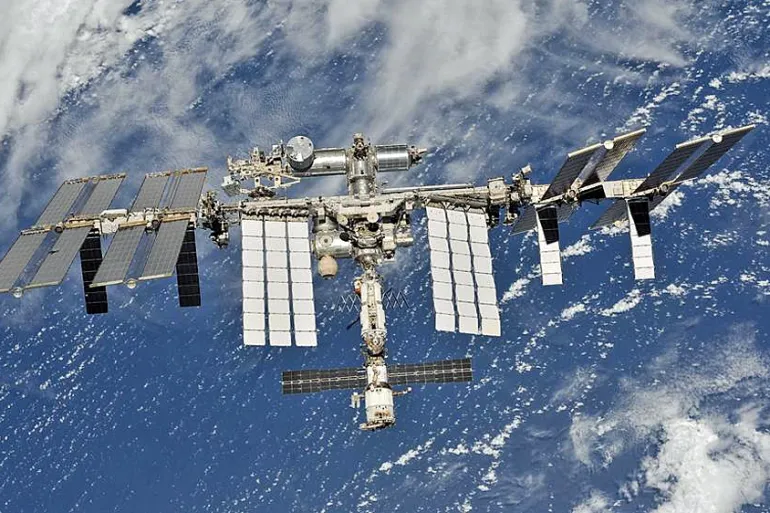
On the evening of January 7, 2026, Mike Fincke was eating dinner aboard the International Space Station when something went wrong. Without warning, the 59-year-old retired Air Force colonel and four-time space veteran found himself completely unable to speak. The episode lasted around 20 minutes. He felt no pain and experienced no other symptoms. Then, just as suddenly as it had arrived, it passed — and he felt entirely normal again.
What followed that quiet dinner on an orbiting laboratory 250 miles above Earth became one of the most significant events in the 25-year history of the ISS. The NASA astronaut medical emergency triggered the first medical evacuation in the space station’s history, cutting the Crew-11 mission more than a month short and forcing a rapid sequence of decisions that tested every layer of NASA’s training, protocols, and crisis management infrastructure.
How the Crisis Unfolded
Fincke’s crewmates — NASA astronaut Zena Cardman, JAXA astronaut Kimiya Yui, and Roscosmos cosmonaut Oleg Platonov — noticed immediately that something was wrong. Within seconds, all four were gathered around him and flight surgeons on the ground were being contacted for urgent guidance. “It was all hands on deck within just a matter of seconds,” Fincke later recalled to the Associated Press. “My crewmates definitely saw that I was in distress.”
The planned spacewalk for January 8 — which would have been Fincke’s tenth career spacewalk and the first ever for Cardman — was immediately cancelled. As NASA’s medical teams assessed the situation from the ground using the station’s onboard ultrasound system, the decision was made to bring the entire crew home. The ISS does not carry the advanced imaging equipment that doctors needed to properly evaluate Fincke’s condition, and the risk of a recurrence in orbit outweighed the cost of ending the mission early.
On January 15, 2026, the SpaceX Crew Dragon capsule Endeavour splashed down in the Pacific Ocean near San Diego in the middle of the night. Each crew member was wheeled from the capsule on a stretcher — standard procedure after extended time in microgravity — and transported by helicopter to Scripps Memorial Hospital La Jolla for immediate medical evaluation.
NASA Administrator Jared Isaacman confirmed the NASA astronaut medical emergency at a press conference the same morning, describing it as a “serious medical condition” while stressing that the affected crew member was in stable condition and good spirits. At that stage, neither the identity of the astronaut nor the nature of the episode had been publicly disclosed.
The Mystery That Remains
The crew held a joint press conference on January 21, declining to name the individual involved or specify the nature of the event. The tone was measured and deliberate. “NASA made all the right decisions, in my opinion,” said Cardman. Yui noted the experience had reinforced his confidence in NASA’s preparation for future human spaceflight.
It was not until February 25, 2026, that Fincke publicly identified himself — releasing a statement through NASA at his own request, saying he had experienced a medical event requiring “advanced medical imaging not available on the space station.” His crewmates’ rapid response had stabilised his condition quickly. He thanked his crew, NASA’s flight surgeons, and the staff at Scripps Memorial Hospital.
By late March, speaking to the Associated Press from Johnson Space Center in Houston, Fincke confirmed that doctors still had not determined what caused the episode. A heart attack, stroke, and choking had all been ruled out. The event had struck like what he described as “a very, very fast lightning bolt” and had not recurred once since his return to Earth. He had accumulated 549 days in orbit across his career and had never experienced anything remotely similar. NASA confirmed it was reviewing the medical records of other astronauts for any comparable incidents.
What It Means for the Future
| Timeline | Event |
|---|---|
| January 7, 2026 | Fincke experiences sudden speech loss during dinner on ISS |
| January 8, 2026 | Planned spacewalk cancelled; NASA begins evacuation planning |
| January 15, 2026 | Crew-11 splashes down near San Diego; crew taken to hospital |
| January 21, 2026 | Crew holds press conference; identity and condition remain undisclosed |
| February 13, 2026 | Crew-12 launches to restore ISS to full crew complement |
| February 25, 2026 | Fincke publicly identifies himself as the astronaut involved |
| March 2026 | Doctors confirm cause of episode remains unknown |
The broader implications of this NASA astronaut medical emergency extend well beyond one individual’s health. The ISS has hosted continuous human occupation since November 2000, and in that entire span — across hundreds of crew rotations and thousands of cumulative days in orbit — nothing like this had ever prompted a full medical evacuation. The event exposed the limits of onboard medical capability in a way that prior incidents involving toothaches, back pain, and even a blood clot treated with medication had not.
NASA’s Artemis II mission — designed to carry four astronauts around the Moon for the first time in more than half a century — was in final preparation during the weeks surrounding the evacuation. Crew-11 members were notably supportive of that programme’s readiness despite their own experience. “When humans return from space, we are reminded just how human we are,” Fincke wrote in his February statement, a line that landed with unusual weight given the circumstances.
The NASA astronaut medical emergency of January 2026 will be studied by space medicine researchers for years. It raised fundamental questions about neurological monitoring in microgravity, the adequacy of onboard diagnostic equipment, and what protocols should look like for longer-duration missions to the Moon and eventually Mars — environments where a rapid return to Earth will simply not be an option.