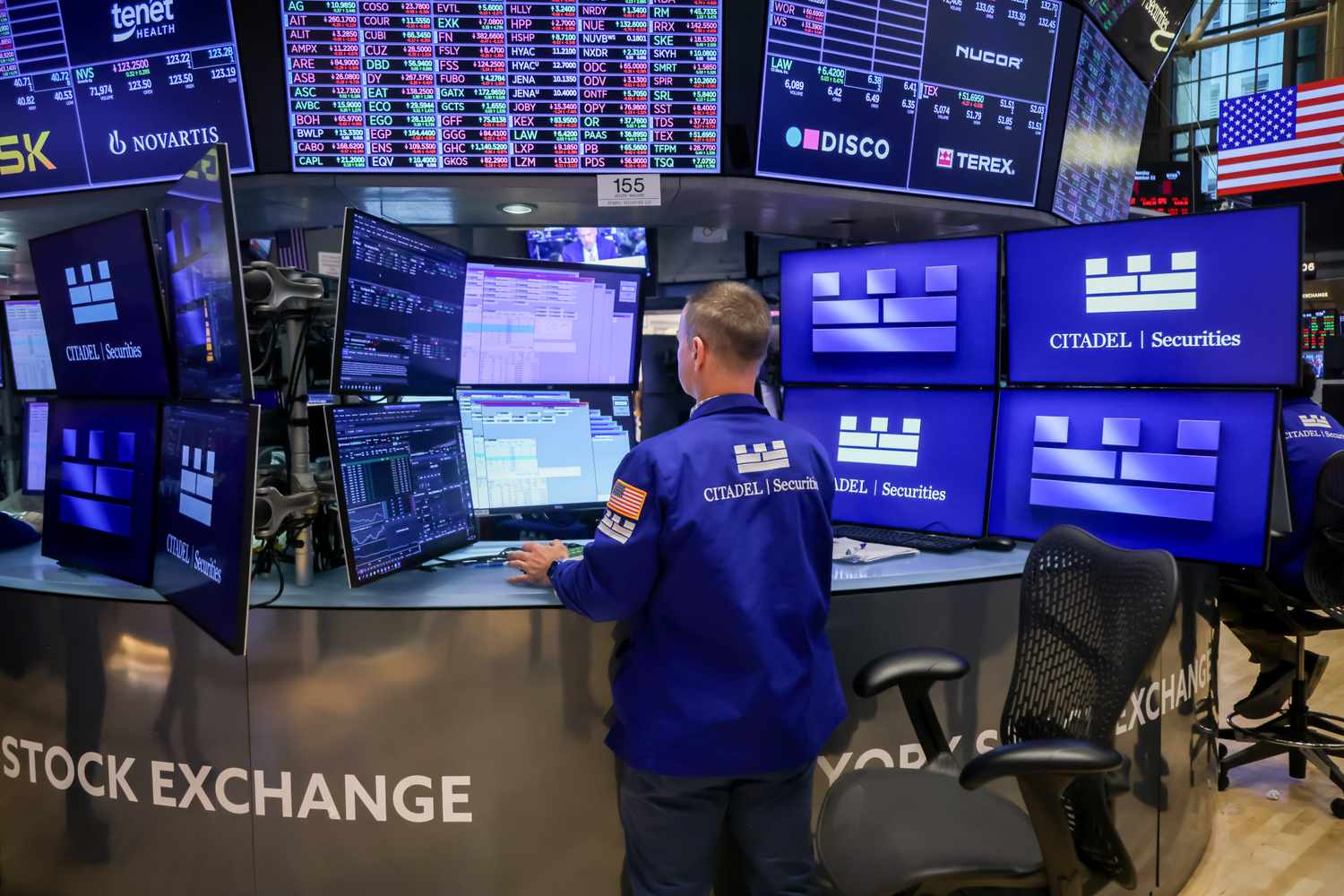
IBM shares plunged 26% after the company issued preliminary results falling well short of analyst expectations, marking what analysts are calling the stock’s worst single-day drop ever.
The previous record decline for IBM came during Black Monday in 1987, and the current selloff is on track to exceed even that historic market event.
The preliminary report showed IBM revenue coming in at approximately $17.2 billion, against analyst expectations of around $17.9 billion, a shortfall of roughly $700 million.
CEO Arvind Krishna attributed the revenue miss to a shift in client spending during the final weeks of June, with enterprise customers redirecting capital expenditure toward hardware servers, memory, and storage instead of IBM’s core offerings.
Motley Fool contributor Matt Frankel noted that earnings per share came in at $2.93 versus expectations of $3.02, figures that on their own would not typically justify a 26% single-day selloff.
The deeper concern driving investor anxiety is whether this shift in enterprise spending toward memory and hardware represents a temporary reaction to supply constraints or signals a longer-term structural problem for IBM.
Frankel pointed out that Micron recently indicated memory supply is expected to remain tight well into 2027, and memory companies are increasingly moving toward longer-term price-locked service contracts, which raises concerns about sustained pressure on IBM’s business.
Lou Whiteman offered a cautionary framing, suggesting IBM may be more of a discretionary spend for enterprise clients than a mission-critical staple, particularly as corporations face hard budget choices during the current AI investment cycle.
Whiteman also noted that the selloff essentially brings IBM back to its mid-May price levels, a perspective that matters for investors now weighing whether this represents a genuine buying opportunity or a warning sign of deeper trouble ahead.
Despite the dramatic single-day drop, IBM has still outperformed the broader market on a total return basis over both three-year and five-year periods, according to the show’s hosts.
In sharp contrast to IBM’s struggles, America’s biggest banks delivered exceptionally strong quarterly results, with JPMorgan Chase, Bank of America, Wells Fargo, Goldman Sachs, and Citigroup all reporting better-than-expected earnings on the same day.
JPMorgan Chase reported earnings per share of $7.70, nearly $2 above analyst expectations, and beat revenue forecasts by approximately $7 billion in what hosts described as a dominant performance across the board.
Goldman Sachs brought in $7.5 billion in equities trading revenue for the quarter alone, with broader market volatility and high deal volumes contributing significantly to the result.
Matt Frankel highlighted that global mergers and acquisitions reached $3 trillion in the first half of 2026, a level not seen since 2021, pushing back against the idea that strong trading results were driven by any single event or IPO.
JPMorgan Chase raised its full-year net interest income forecast by $2.5 billion compared to its April guidance, pointing to strong loan growth and favorable dynamics between deposit costs and lending rates.
Goldman Sachs reported assets under management growing by 20% year over year, a figure that outpaced broader market gains and reflected significant new investor inflows across the wealth management sector.
Credit quality across the major banks held up better than feared, with most institutions reporting lower-than-expected charge-offs despite ongoing concerns about inflation and broader economic uncertainty.
Whiteman reserved special praise for Citigroup, noting that CEO Jane Fraser’s restructuring program appears to be ahead of schedule, with the bank raising its dividend by 12% and announcing a $30 billion share buyback program.
On the topic of restaurant technology platform Toast, Frankel noted that annual recurring revenue grew 26% in the most recent quarter, with 7,000 new locations added and operating margin exceeding 20% for the first time ever.
Whiteman remained more cautious on Toast as a stock, pointing to the intensely competitive landscape alongside Clover and Block’s Square, and questioning whether switching costs are strong enough to provide durable long-term pricing power in such a low-margin industry.