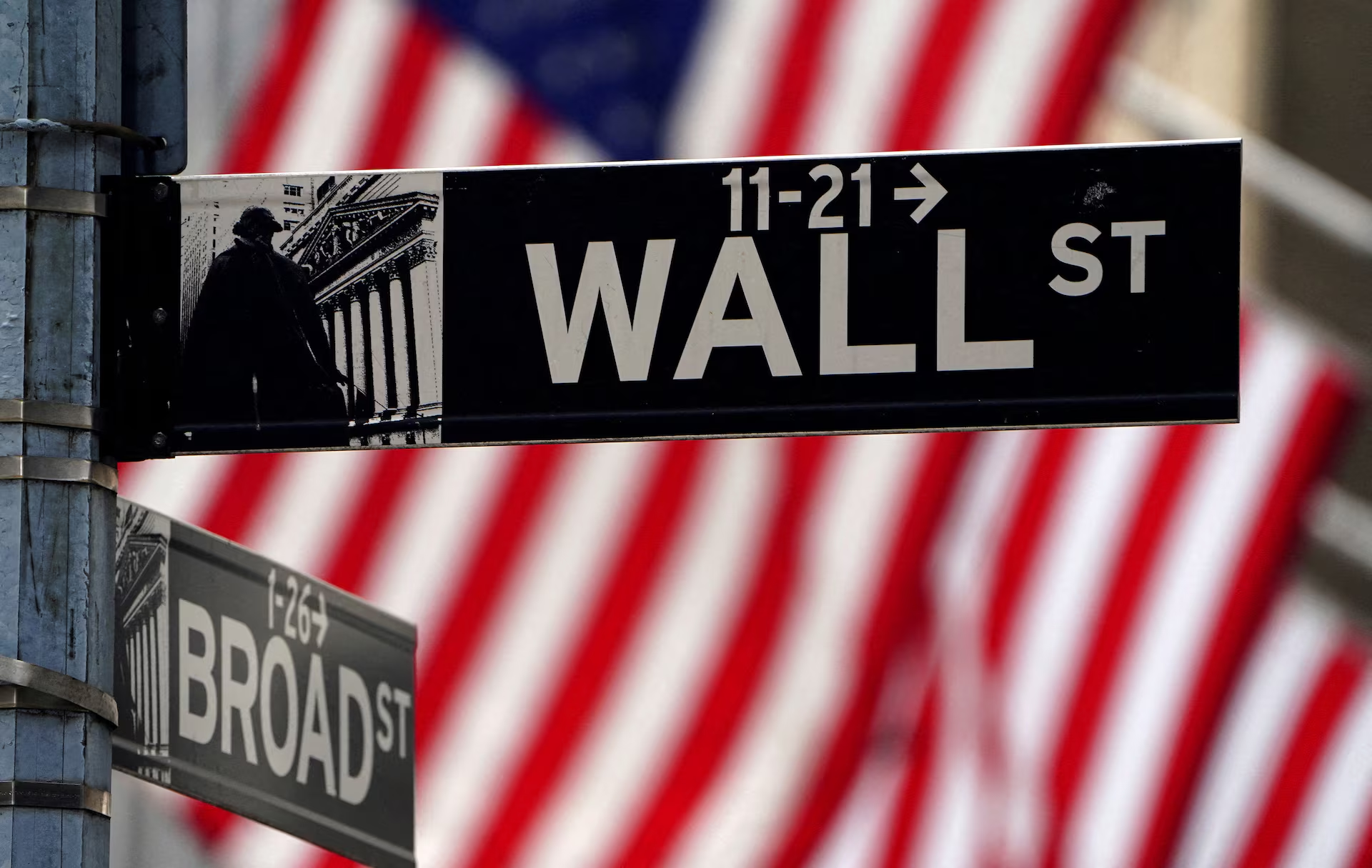
Since Kevin Warsh succeeded Jerome Powell as Fed Chairman in mid-May, the S&P 500 has gained a modest 4.2%, with the most pronounced move occurring over just the last week or so.
Markets have remained relatively measured since Warsh took the helm, but investors are now dissecting every word he utters with extraordinary intensity.
Warsh has deliberately stripped away the lengthy commentary and forward guidance that once dominated Federal Reserve communications under his predecessor.
His first FOMC meeting in June produced the shortest policy statement in nearly two decades, a blunt 130-word document capped with a promise to deliver price stability.
The scarcity of language from the new Fed Chairman means that each phrase he does offer carries far more weight than it otherwise would in normal circumstances.
On July 29, following his second major policy meeting where the committee voted to hold rates, Warsh addressed speculation that the Fed might tolerate inflation running above its perceived goal.
His response was unambiguous: “There is no soft inflation target, there is no soft implicit target — not on this Committee’s watch. There is only a target, and it is 2%.”
This declaration builds directly on his earlier confirmation hearing remarks, where Warsh stated plainly that “inflation is a choice,” signalling a deeply principled stance on price stability.
Warsh has also described internal deliberations at the Fed as a “good family fight,” suggesting intense debate behind closed doors while insisting the final public message remains unified and measured.
Taken together, these statements reject any notion of flexibility or temporary acceptance of prices running hot above the central bank’s official goal.
Bond markets are already responding, with longer-term rates climbing as investors price in a lower tolerance for persistent inflation across future Federal Reserve meetings.
Equity markets, meanwhile, have grown particularly sensitive to macroeconomic data releases because the Fed is no longer offering verbal assurance about any explicit path forward for rates.
Warsh appears to be deliberately carving out a sharper distinction between the central bank’s actions and the public interpretation of its intentions.
His refusal to engage in forecasts or hypothetical rate scenarios forces investors to index harder on scheduled meetings and incoming economic data rather than Fed commentary.
The firm insistence that there is no soft inflation target signals to Wall Street that the Fed’s institutional credibility now hinges on delivering exactly 2% inflation, not managing expectations through soundbites.
How the committee follows through in upcoming meetings will determine whether this phrase becomes the foundation of a more disciplined monetary policy era or the trigger for greater market volatility.