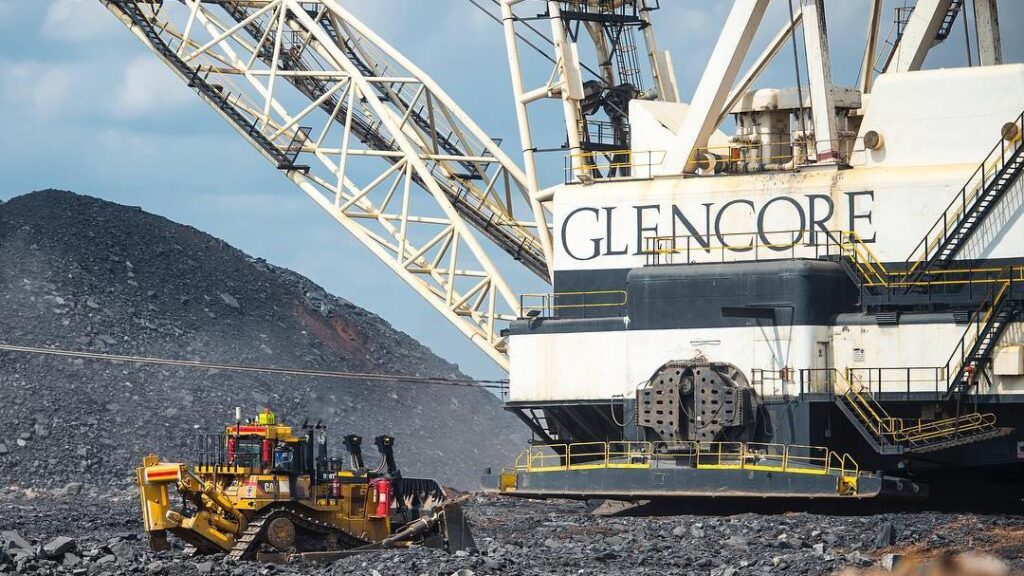
Mining shares provided support to London markets as stronger economic signals and renewed metals interest pushed established producers back into value conversations.
Rio Tinto (LSE:RIO), Glencore (LSE:GLEN), Anglo American (LSE:AAL) and Antofagasta (LSE:ANTO) all own long-life assets and established infrastructure, yet their market ratings remain tied to volatile commodity expectations.
The core difficulty is that a miner can look least expensive precisely when earnings are near a cyclical high, distorting simple valuation ratios.
Strong commodity prices lift profit quickly, causing price-to-earnings measures to fall even when markets expect that benefit to fade over time.
A genuine value assessment therefore requires a view of normalised cash generation across both weaker and stronger commodity conditions.
Rio Tinto (LSE:RIO) brings scale, diversified mining systems and exposure to several commodities, with its large iron-ore operations historically generating substantial cash flow.
High-quality, low-cost assets can remain profitable through more of the cycle than marginal mines, making cost position a critical foundation for any value argument.
Concentration still matters for Rio Tinto (LSE:RIO), as iron ore remains heavily linked to steel demand and Chinese construction activity, limiting the benefit of commodity diversification.
Glencore (LSE:GLEN) combines mining with a global commodity-marketing operation, creating a cash-flow stream that does not match mine margins exactly and adds working-capital complexity.
A low group valuation for Glencore (LSE:GLEN) may reflect environmental concerns, legal history, portfolio complexity or uncertainty over how long selected commodities remain commercially attractive.
Anglo American (LSE:AAL) has been reshaping its portfolio through disposals and separations, which changes both the assets investors are pricing and the risks they attach to the group.
Value can be lost if Anglo American (LSE:AAL) sells assets under pressure, but it can be created when ownership changes allow assets to receive better capital and management attention.
Copper is associated with power networks, electrification, data infrastructure and transport, giving it a structural demand narrative alongside the traditional industrial cycle.
Antofagasta (LSE:ANTO) offers relatively focused copper exposure, while Rio Tinto (LSE:RIO), Glencore (LSE:GLEN) and Anglo American (LSE:AAL) hold copper within broader diversified portfolios.
Long-term copper scarcity arguments need to be balanced against short-term pricing realities, as high prices encourage substitution, recycling and new mine investment that can erode supply constraints.
A mine’s revenue may follow commodity prices, but its margin also depends on ore grade, recovery, energy, labour, freight and ongoing maintenance requirements.
Inflation can conceal itself during a strong price period because revenue rises faster than costs, only becoming visible when the commodity cycle turns downward.
Project pipelines can destroy or create value, as cost overruns on new mines can erase the advantage of even a strong underlying resource position.
A disciplined project pipeline ranks opportunities by realistic returns, preserves flexibility to pause when prices deteriorate and can actually lift market value when a weak project is cancelled.
Mineral ownership does not guarantee permission to extract, and water rights, environmental approvals and community relationships determine whether an asset can operate on schedule.
Antofagasta (LSE:ANTO) has material exposure to Chilean water and permitting conditions, while the diversified groups must manage varied regulatory frameworks across multiple countries simultaneously.
Sustaining capital deserves separate attention from expansion spending, covering stripping, equipment, tailings and infrastructure needed to keep existing mines productive and safe.
If Rio Tinto (LSE:RIO), Glencore (LSE:GLEN) or Antofagasta (LSE:ANTO) reduce sustaining capital too far, reported free cash can meaningfully overstate the economic value being generated.
London’s large-company index carries substantial commodity exposure, meaning mining moves can shape broader market direction even when domestic economic data dominate the news cycle.
The value question is timely because sentiment can improve before the earnings cycle becomes clearer, and the strongest analysis separates the current market bid from the economics that survive weaker prices.