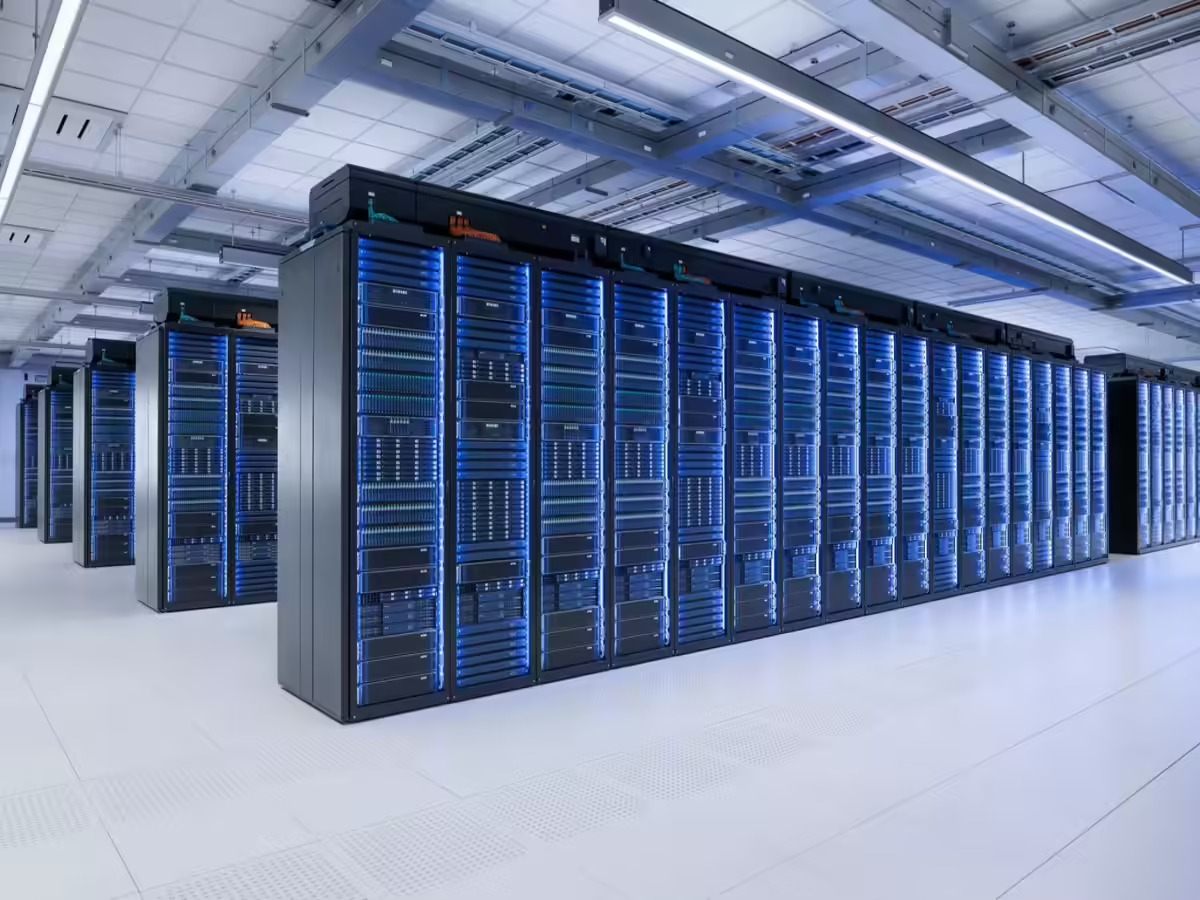
Having twice upgraded its medium-term outlook, STMicroelectronics (STM) now expects data center revenues to surpass $1 billion in 2026 and exceed $2 billion in 2027.
That trajectory of accelerating AI infrastructure spending sets a compelling backdrop as the chipmaker prepares to open its books on October 29, before markets begin trading.
Wall Street’s consensus pegs third-quarter 2026 revenue at $3.71 billion, a meaningful step up from the $3.19 billion the company recorded in the same period a year earlier.
If confirmed, the result would represent year-over-year growth of roughly 16 percent, driven largely by sustained enterprise investment in high-performance computing and AI-oriented semiconductor solutions.
STM’s growing footprint in data center silicon has become one of its most closely watched growth levers, with analysts tracking whether demand is translating into durable top-line momentum.
Yet the company is not immune to the broader pressures weighing on the semiconductor industry, and the quarter was likely not without friction.
Pricing headwinds, uneven customer inventory cycles, elevated manufacturing costs, and lower-than-optimal capacity utilization may all have trimmed margins during the September period.
Slower recoveries in certain business segments could also have blunted overall performance, even as the data center and AI portions of the portfolio showed strength.
Just three days before the scheduled earnings release, STM unveiled new automotive safety combination sensors on October 26, targeting broader mass-market adoption of advanced safety and driver-assistance technologies.
The sensors hold added strategic significance because they represent the first mass-market products to emerge following STM’s integration of NXP’s automotive and industrial MEMS sensors business earlier in 2026.
That acquisition has expanded the company’s addressable market in automotive electronics at a moment when vehicle safety regulations and consumer expectations are pushing demand for sophisticated sensing hardware.
Ongoing research and development investment is expected to underpin product innovation across both automotive and data center lines, supporting operational efficiency and longer-range competitive positioning.
With two major product and forecast catalysts already in play this week, investor attention will centre firmly on management’s commentary around profitability and the pace of segment-level recovery when results land on October 29.