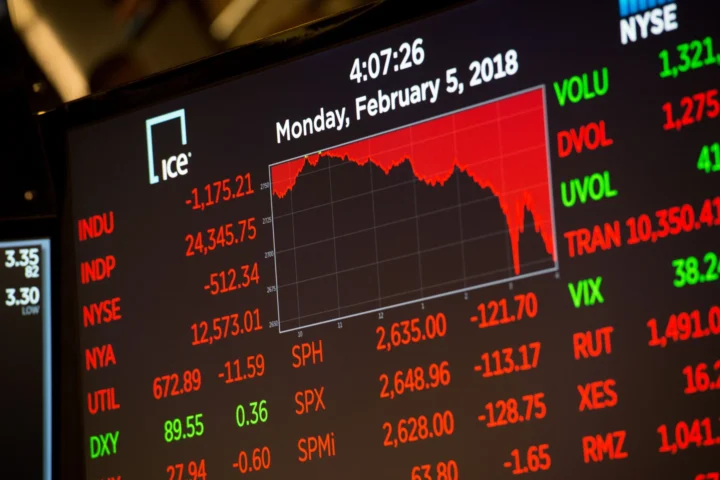
Growing unease about artificial intelligence as a sustainable economic engine is pushing investors to rethink how they protect their portfolios heading into a potentially volatile period.
AI has been described as the biggest driver of recent economic growth, and any wobble in its trajectory is now enough to put markets on edge across the board.
Despite those anxieties, earnings expectations for U.S. companies remain broadly strong, creating a confusing mixed signal that leaves many investors unsure how to position themselves.
The instinct for most people in this situation is to wait, watch the market fall, and then buy back in at what looks like the bottom, a strategy that sounds logical but rarely works in practice.
Bear markets have a well-documented history of rebounding far faster than investors anticipate, often recovering substantially before most people decide conditions are safe enough to re-enter.
By the time a cautious investor concludes the worst is over, the best early gains of the recovery have already been captured by those who stayed in or kept buying throughout.
Even experienced fund managers have been burned by this dynamic repeatedly, and the data consistently shows that missing just a handful of the market’s best days can devastate long-term returns.
The strategy that history consistently validates is dollar-cost averaging, which means committing a fixed sum to investments such as an S&P 500 ETF on a regular schedule regardless of where the market stands.
The mechanical logic is straightforward: a fixed dollar amount buys more shares when prices are depressed during a bear market and fewer shares when prices are elevated during a bull run.
That automatic calibration gradually lowers your average cost basis across the full investment period, which directly strengthens long-term return potential without requiring any forecast or prediction.
Bear markets also tend to be considerably shorter in duration than the bull markets that precede and follow them, meaning the window for accumulating cheaper shares is often narrower than investors expect.
The approach also removes the psychological burden of constantly monitoring conditions and deciding whether today is finally the right moment to act, which is where most individual investors lose ground.
As one analysis of the strategy put it, “investing is one of the few things where doing less can yield better results,” a counterintuitive truth that decades of market data continue to support.
For investors watching the current tension between strong corporate earnings and AI-related uncertainty, the evidence suggests that discipline and consistency will outperform even the most carefully timed re-entry strategy.