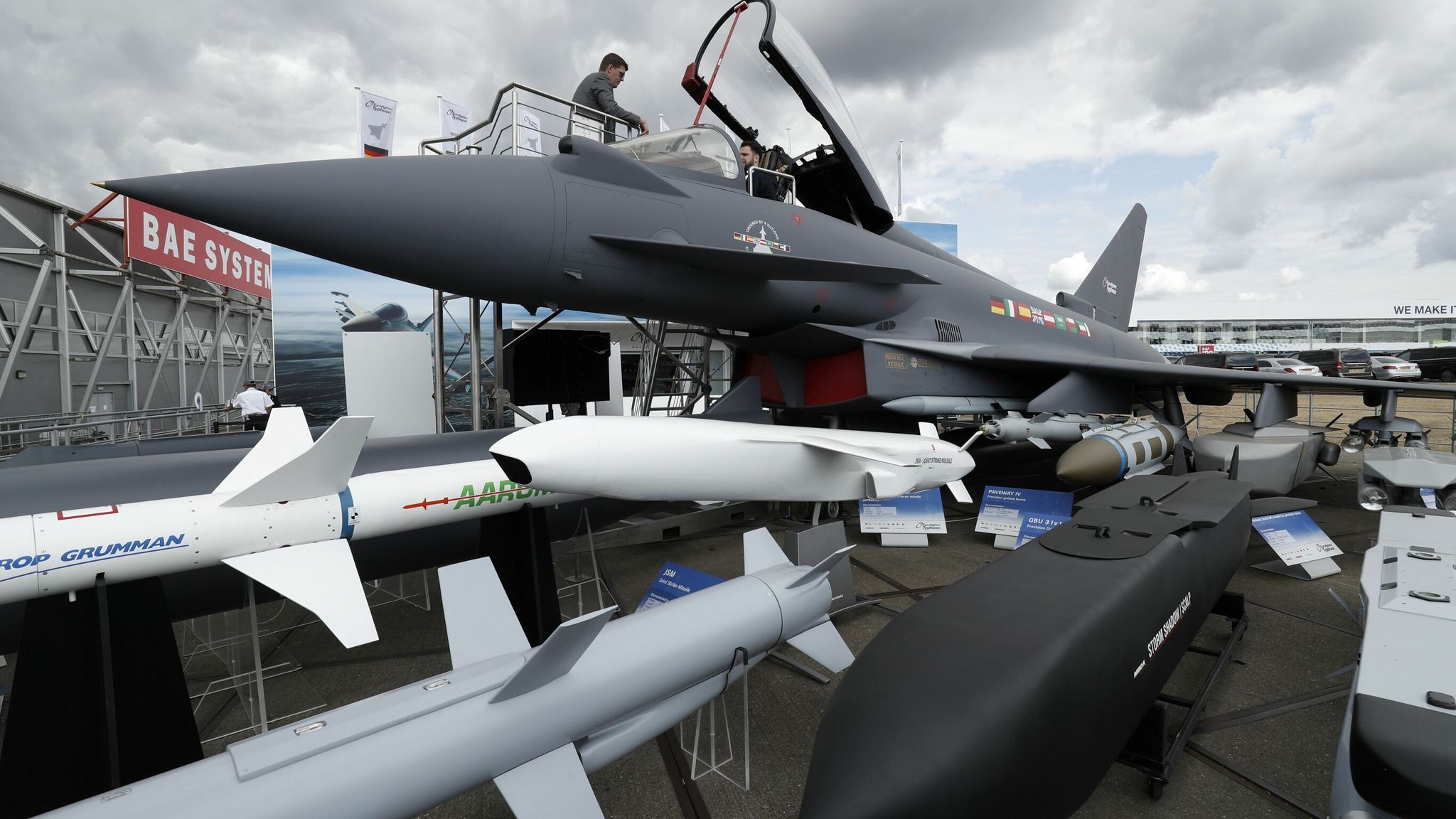
European equity markets opened the week under considerable pressure, yet defense manufacturers emerged as a rare pocket of strength as investors reacted to rapidly escalating military developments across the Middle East.
The pan-European Stoxx 600 index slipped 1.4% to a two-week low, reflecting heightened anxiety about geopolitical risk and its implications for economic growth and inflation.
Against that backdrop, Germany’s Hensoldt and Britain’s BAE Systems led sector gains, each climbing more than 5% as investors rotated into perceived beneficiaries of prolonged instability.
Other prominent European names including Thales, Renk, and Leonardo posted advances between 3.1% and 4.5%, reinforcing the defensive bid across the sector.
In the United States, premarket trading showed strong interest in major contractors, with Lockheed Martin rising 7.7% and Northrop Grumman gaining 5.2% as futures tied to the S&P 500 declined 1%.
Conflict Enters Third Day With Uncertain Timeline
The surge in defense stocks followed a dramatic weekend in which the United States and Israel launched widespread strikes on Iran, killing Iranian Supreme Leader Ayatollah Ali Khamenei and ending his 36-year rule.
Iran responded with retaliatory attacks on U.S. bases across the region, resulting in the deaths of three American service members and raising fears of a broader regional confrontation.
By Monday, the conflict had entered its third day, with U.S. President Donald Trump warning of further American casualties and suggesting that hostilities could extend for up to four weeks.
The prospect of a prolonged military campaign has injected fresh volatility into global markets, particularly as investors weigh the potential knock-on effects for energy supplies and macroeconomic stability.
Oil prices and energy-related equities moved sharply higher in parallel with defense shares, reflecting concerns about supply disruptions and sustained geopolitical strain.
Investors Grapple With Duration And Economic Impact
Market strategists emphasized that uncertainty surrounding the conflict’s duration remains the dominant variable shaping asset prices across regions and sectors.
“It’s very much one of uncertainty at the moment that investors are grappling with,” said Patrick O’Donnell, Chief Investment Strategist at Omnis Investments.
“Equity markets are a little bit more uncertain about just how long this is going to drag on, for the implication for both growth and inflation that it will have the longer that it goes on,” O’Donnell told CNBC’s “Squawk Box Europe” on Monday.
“Really, it’s a question of… what’s the duration of this conflict?”
While Asian trading activity was somewhat muted due to market closures in South Korea, Japanese defense groups Mitsubishi Heavy Industries and IHI each rose about 3%, and Singapore’s ST Engineering advanced 2.8%.
The divergence between defense stocks and the broader market underscores how rapidly capital can rotate during geopolitical shocks, particularly when investors seek sectors perceived to benefit from rising military expenditure.