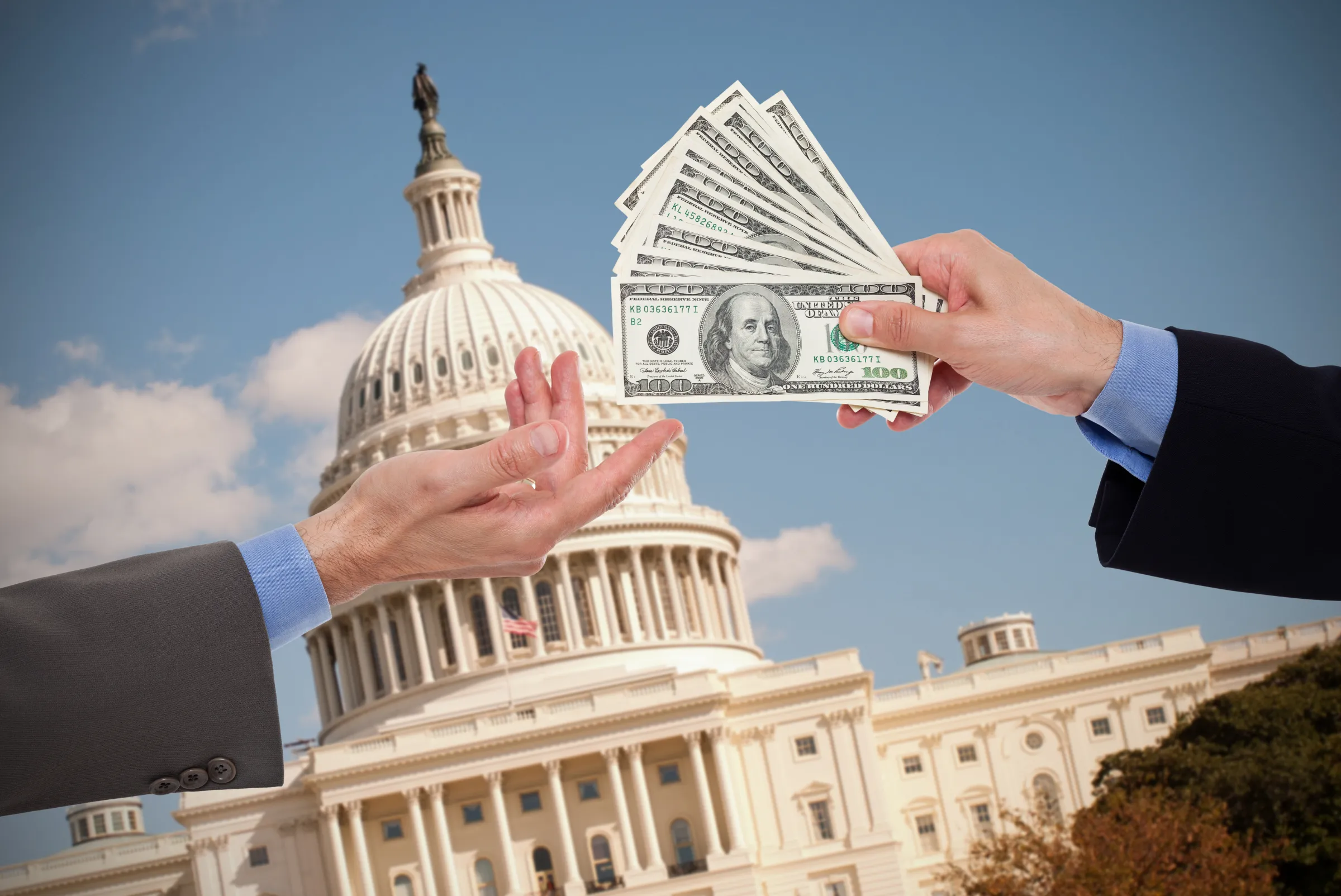
This article explains why and how do lobbyists exert influence among all three branches of government in the US.
Few practices in American political life are as misunderstood or as consequential as lobbying.
Often portrayed as a shadowy exchange of favours, lobbying is in fact a constitutionally protected activity that shapes legislation, regulation, and policy at every level of the United States government.
The question of whether lobbyists exert meaningful influence across all three branches, the legislative, executive, and judicial, is one that has substantial practical and democratic significance.
Defining Lobbying
Lobbying, at its core, is the act of attempting to influence the decisions of government officials on behalf of a group or individual with a stake in those decisions.
The term derives from the practice of individuals gathering in the lobbies of legislative buildings to speak with lawmakers before or after sessions.
In the modern era, lobbying encompasses a vast range of activities including direct meetings with elected officials and their staff, written communications, public campaigns, coalition building, expert testimony, and the provision of research and policy analysis.
Lobbyists can represent corporations, trade associations, labour unions, non-profit organisations, foreign governments, and individual companies seeking specific legislative or regulatory outcomes.
The profession is regulated by the Lobbying Disclosure Act of 1995, which requires individuals who spend more than 20% of their time lobbying on behalf of a client to register with Congress and disclose their activities and income.
The Legislative Branch: Where Lobbying Is Most Visible
The United States Congress remains the most prominent arena for lobbying activity.
Lobbyists engage with members of the House and Senate, their legislative aides, and committee staff to advocate for or against specific bills, amendments, and budget allocations.
The relationship between lobbyists and Congress is both extensive and well-documented.
According to data from OpenSecrets, total reported lobbying spending in the United States exceeded $4.1 billion in 2022 alone.
The healthcare sector consistently ranks as the highest-spending industry on federal lobbying, followed by finance, insurance, real estate, and the technology sector.
Lobbyists provide members of Congress with research, draft legislative language, organise constituent outreach, and coordinate testimony from experts, activities that can meaningfully shape the content of legislation before it ever reaches a floor vote.
The Executive Branch: Regulatory Influence Behind the Scenes
Lobbying of the executive branch is less visible but arguably equally significant.
Federal agencies, which sit within the executive branch, write thousands of pages of regulations each year that carry the force of law.
Lobbyists engage heavily with agency officials, particularly during the rulemaking process, which typically includes a public comment period during which interested parties can submit written input.
Industries that face significant regulatory oversight, including energy, pharmaceuticals, financial services, and telecommunications, invest considerable resources in shaping how agencies interpret and implement legislation.
The White House itself is also a target of lobbying activity, particularly on major policy priorities such as trade agreements, executive orders, and budget proposals.
Former members of Congress and senior government officials are frequently hired as lobbyists precisely because of their relationships within the executive branch.
The Judicial Branch: Indirect but Present
The judicial branch presents a more complex case.
Federal judges and Supreme Court justices are not directly lobbied in the conventional sense, and any attempt to approach a judge about a pending case would constitute improper contact or potential obstruction of justice.
However, influence over the judiciary does occur through other mechanisms.
Interest groups file amicus curiae briefs, or friend of the court briefs, in significant cases before appellate courts and the Supreme Court.
These submissions present legal arguments and policy considerations that justices and their clerks may weigh when deliberating.
Lobbying also affects the judiciary indirectly through the judicial confirmation process.
Interest groups invest heavily in advocating for or against nominees to the federal bench, testifying before the Senate Judiciary Committee and running public campaigns designed to influence confirmation votes.
The Federalist Society and its progressive counterparts have become influential players in shaping the ideological composition of the federal courts over the past several decades.
Key Lobbying Facts and Figures
| Category | Detail |
|---|---|
| Total US lobbying spend (2022) | Over $4.1 billion |
| Number of registered lobbyists (2022) | Approximately 12,000 |
| Top spending sector | Healthcare ($685 million+ in 2022) |
| Governing legislation | Lobbying Disclosure Act, 1995 |
| Common executive engagement | Federal agency rulemaking comment periods |
| Judicial influence mechanism | Amicus curiae briefs, confirmation advocacy |
| “Revolving door” concern | Former officials becoming lobbyists |
The Revolving Door and How Lobbyists Exert Influence Among All 3 Branches
One of the most persistent criticisms of lobbying as a practice is the phenomenon known as the revolving door.
This refers to the movement of individuals between senior government positions and private-sector lobbying roles, raising concerns that public office is being used to cultivate relationships that later benefit private clients.
Federal law imposes cooling-off periods on former officials before they may lobby their former agencies or colleagues, though critics argue these restrictions are insufficient given the seniority and contact networks involved.
Proponents of lobbying argue that the activity is an essential expression of the First Amendment right to petition the government, and that it provides lawmakers and regulators with expertise and perspectives they would otherwise lack.
Critics counter that the financial scale of modern lobbying creates a structural advantage for well-resourced interests over ordinary citizens.
Both arguments have merit, and the tension between them sits at the heart of ongoing debates about campaign finance law, ethics reform, and the transparency of government decision-making.
What is clear is that lobbying does not confine itself to one branch of government.
It permeates all three, adapting its form and methods to the particular dynamics and rules of each institutional setting.