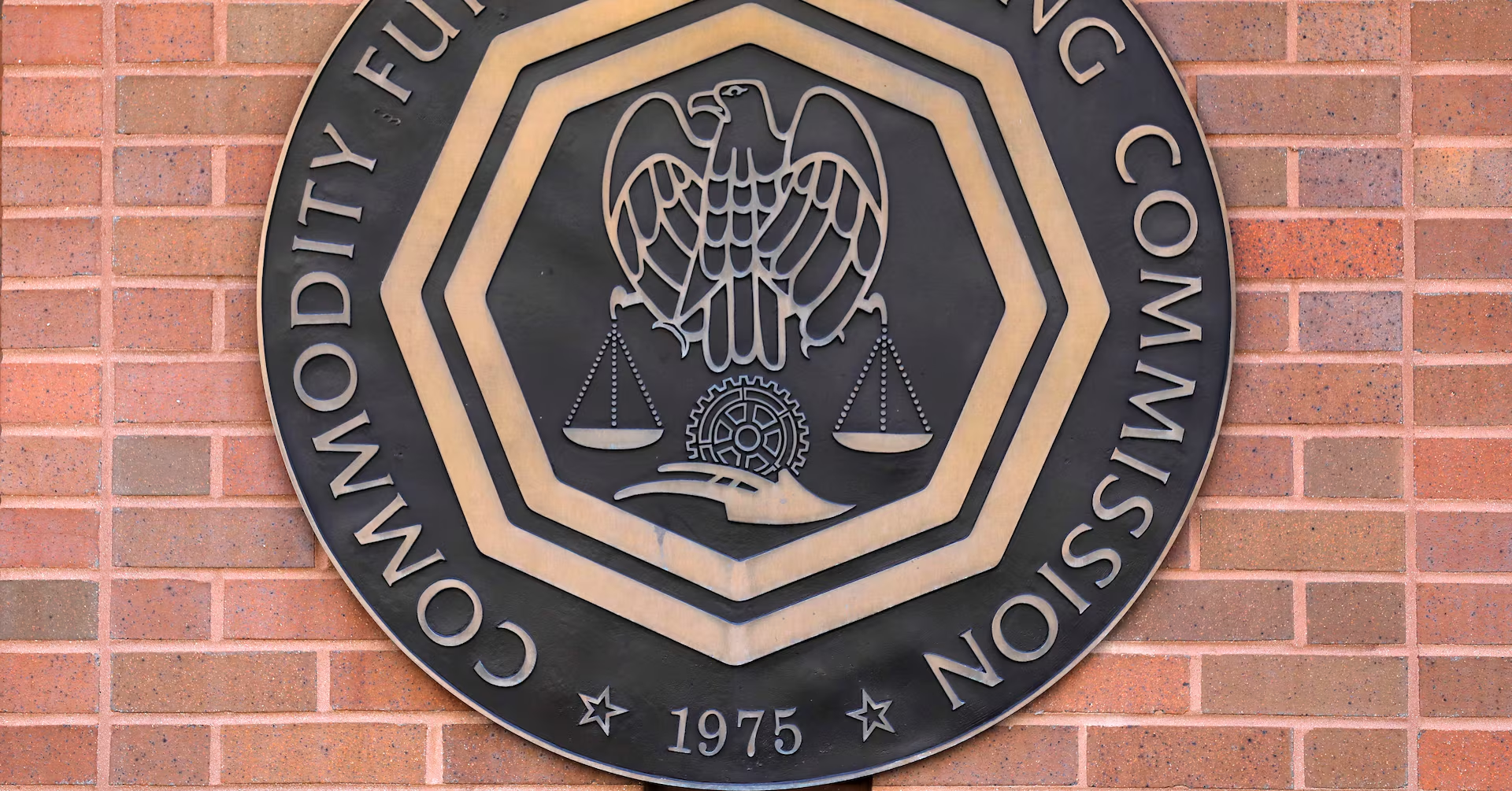
CFTC Chair Michael Selig has escalated a jurisdiction dispute with state regulators, insisting federal derivatives oversight applies to prediction markets and warning legal challenges will now be actively contested in court proceedings nationwide.
In a video statement posted on X, Selig confirmed the agency filed an amicus brief defending what he described as its “exclusive jurisdiction” over event contracts operating similarly to financial derivatives markets.
He argued the regulator has supervised these markets for more than two decades and said Americans rely on them to hedge commercial exposure including weather fluctuations and energy-price volatility risks.
According to Selig, prediction platforms also help evaluate information credibility because pricing mechanisms reveal public expectations, effectively acting as a real-time check on media narratives and forecasts.
Legal Battles With States And Policy Reversal
Selig accused state authorities of launching an “onslaught of state-led litigation” targeting companies such as Coinbase, Crypto.com, Kalshi and Polymarket, adding those challenging federal oversight “will see” the agency “in court.”
His position marks a major shift from earlier regulatory attempts to shut down political and event-based contracts, actions courts partially resisted before leadership changes followed Donald Trump’s return to the presidency.
After the leadership overhaul, the CFTC withdrew litigation and abandoned a proposal to ban political and sports prediction markets while also pursuing joint digital-asset rulemaking cooperation with the SEC.
Selig additionally ordered staff to retract the 2024 proposal aimed at restricting event contracts, signalling a broader federal acceptance of prediction markets within the existing derivatives regulatory framework.
Political Opposition And Gambling Concerns
Utah Governor Spencer Cox publicly rejected the federal claim of authority, posting that he did not recall the CFTC supervising a “derivative market” involving “LeBron James rebounds.”
Cox labelled the products gambling, saying they harm families and young men, and pledged to use every available legal power to “beat” the agency in court proceedings.
Utah lawmakers are advancing legislation targeting certain sports-based contracts even though the state has not been central to the primary enforcement actions so far nationwide.
Meanwhile, Polymarket filed suit against Massachusetts arguing only the federal regulator can police its markets, while Coinbase is suing Connecticut, Illinois and Michigan over gaming classifications.