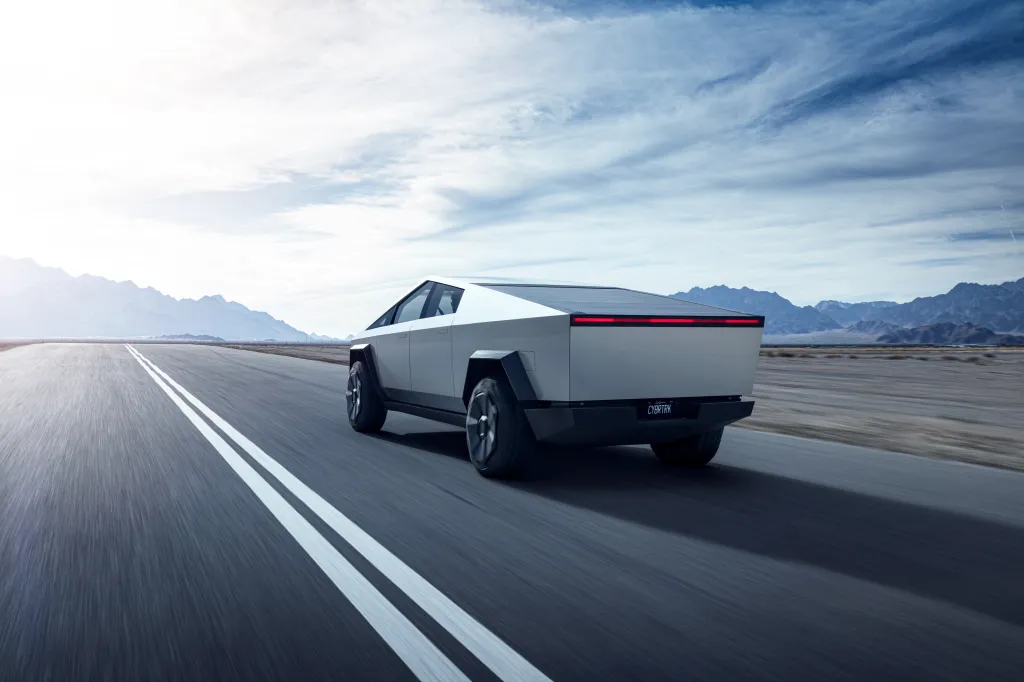
Tesla has introduced a cheaper Cybertruck variant in the United States while also reducing the price of its most expensive version, signalling fresh concern about demand for the unconventional electric pickup.
The new dual-motor all-wheel-drive Cybertruck will start at $59,990, making it the company’s most affordable entry into the lineup since the model launched commercially.
At the same time, Tesla lowered the price of the flagship Cyberbeast to $99,990 from its previous $114,990, a substantial reduction aimed at stimulating hesitant buyers.
The changes suggest the automaker is reworking its sales approach after the futuristic pickup struggled to match initial expectations despite heavy marketing and early enthusiasm from loyal customers.
Package Changes And Product Challenges
Alongside the price adjustments, Tesla appears to be discontinuing the Luxe Package, which previously bundled Supervised Full Self-Driving capability together with complimentary access to the company’s Supercharger network.
That bundle had only been introduced months earlier when the firm raised the Cybertruck’s price, meaning the latest decision effectively reverses a recent premium positioning strategy.
The pickup was originally promoted by Elon Musk as a bold competitor to mainstream trucks from established manufacturers, yet repeated recalls and quality concerns dampened early momentum.
Slow sales pressure was further highlighted when Cybertruck program head Siddhant Awasthi departed the company late last year during a period of disappointing performance.
Broader Electric Vehicle Pressures
Tesla’s core electric-vehicle business remains its primary revenue source, but increased competition from cheaper models and shifting public sentiment have complicated growth projections.
Some consumers were alienated by political controversy surrounding Musk, while the removal of federal EV tax incentives also weakened purchase incentives across the wider market.
The industry slowdown intensified after the government ended the $7,500 subsidy, forcing manufacturers to compete more aggressively on pricing rather than incentives.
Analysts warn that selling a higher proportion of lower-priced vehicles could hurt profit margins unless manufacturing costs fall or software revenue grows significantly.
Pivot Toward Automation And Robotics
Facing cooling demand, Tesla has increasingly emphasized artificial intelligence initiatives, including robotaxis and humanoid robots, as part of its next major growth phase.
The company hopes autonomy technology and robotics will generate higher-margin revenue streams and reduce dependence on conventional vehicle sales over the coming years.
Musk recently confirmed plans to end production of the Model S and Model X in order to free space at the California factory for robot manufacturing.
The decision underscores a broader transformation, with Tesla gradually repositioning itself as a technology and automation company rather than a traditional automaker.