DraftKings has confirmed a round of job cuts across multiple departments, as the Boston-based operator reorganises its internal structure to redirect resources toward what CEO Jason Robins believes is the most significant growth opportunity the company has encountered since sports betting was federally legalised in 2018.
The cuts, which affected roles across software engineering, recruitment and other business segments, came to light after dozens of current and former employees announced their departure on LinkedIn. The company employed roughly 5,500 people across 13 countries at the end of 2025, and analysts estimate the reduction could affect up to 5% of that headcount, generating annual savings of approximately $30 million.
Citizens Equity Research analyst Jordan Bender noted that “the timing of the staff reduction, a week and a half following earnings and guidance, suggests the cost savings were most likely contemplated in the 2026 EBITDA guidance of $700 million to $900 million EBITDA.” That is an important caveat, and it suggests the cuts were strategic rather than reactive, planned quietly before the public announcement.
The formal company statement acknowledged the difficulty of the decision without elaborating on its scope. “DraftKings has decided to reorganise some teams to better align their people with the most important priorities and areas of investment for the company,” a spokesperson said. “Unfortunately, these changes will impact some roles across the organisation.” Several hundred roles are expected to be eliminated based on the 5% estimate.
What makes the timing feel contradictory on the surface is that DraftKings delivered genuinely strong numbers in Q4 2025, with revenue rising 43% year-on-year to nearly $2 billion, adjusted EBITDA of $343 million and a net income of $136 million. The company moved into positive GAAP net income territory for the first time in its history that year. By conventional measures, this is a business in excellent health.
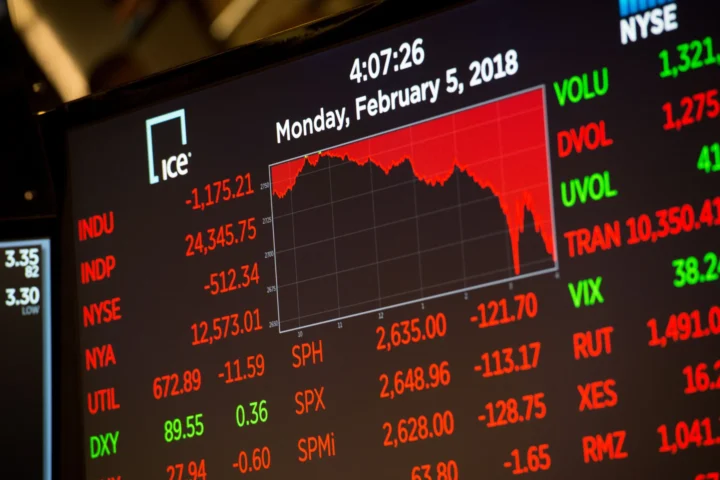
The problem is Wall Street’s expectations, which were notably more aggressive. DraftKings projected 2026 full-year revenue of $6.5 billion to $6.9 billion, falling well short of analyst consensus around $7.3 billion. The stock has fallen roughly 36% year-to-date as a result, sitting near its 52-week low, which reflects genuine concern about whether the company can sustain the kind of growth rates investors had priced in.
Central to the pivot is DraftKings Predictions, a standalone app launched in December 2025 following the acquisition of Railbird, a CFTC-approved derivatives exchange. Prediction markets, which allow users to bet on outcomes spanning sports, politics, entertainment and macroeconomic data, are growing at a pace that is alarming traditional sportsbook operators. Platforms like Kalshi and Polymarket processed over $37 billion in combined volume in 2025 while largely bypassing state-level gambling regulation and its associated tax burden, which reaches 50% of gross gaming revenue in Illinois.
Robins has described the prediction market space as holding “a $10 billion annual gross revenue opportunity in the years ahead,” and DraftKings intends to build infrastructure around it aggressively. The company is also working AI implementation into nearly every business function, which Bender believes will accelerate further cost reductions. “We could expect more cost structure rationalisation in the coming quarters to years as the business continues to benefit from AI and maturing markets,” he wrote in his investor note.
The company’s general and administrative costs have grown by 6%, 13% and 22% in consecutive years from 2023 through 2025, while product and technology costs rose an average of 20% annually. That kind of cost trajectory becomes unsustainable when revenue growth begins to moderate, and that is precisely the scenario DraftKings is now managing.
This restructuring is the second at DraftKings in three years, following a round of 140 redundancies in 2023 that primarily affected engineering and HR roles outside North America. The scale of ambition around prediction markets means the current cuts are unlikely to be the last.