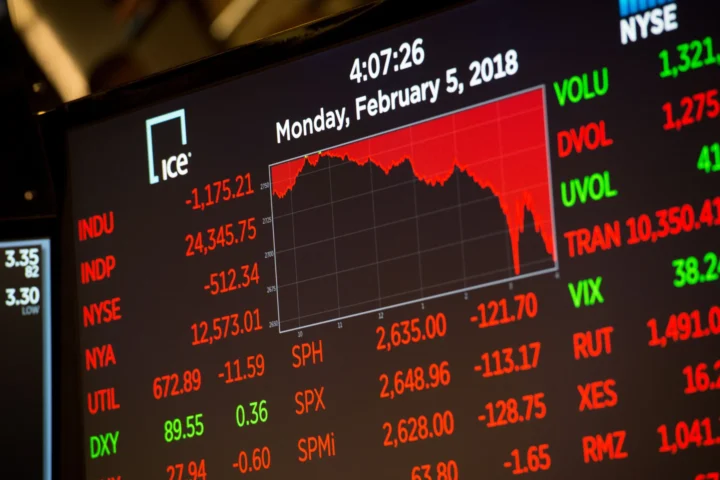
Thursday morning’s picture in Asia was enough to remind investors that the relief rally of earlier this week was built on fragile foundations.
The MSCI Asia Pacific Index fell 1%, US equity futures edged down 0.3%, and Brent crude climbed again after Israel completed what it described as a “wave of strikes” in Isfahan, Iran, targeting infrastructure in several areas. The five-day pause on US strikes was set to expire around March 28, and markets were already pricing in uncertainty about what happens next.
Brent had touched around $112 per barrel just a week ago before collapsing approximately 11% to around $99 when Trump’s ceasefire comments hit the tape on Monday.
The speed and scale of that move underscored how thoroughly oil prices are the transmission mechanism between Middle East developments and global equity markets. Analysts at Wintermute have stated that “the oil move matters more for crypto than the geopolitics itself” — a formulation that applies equally to equity markets.
The Federal Reserve’s March 18 decision to hold rates steady at 3.5% to 3.75% removed one variable but added another. Chairman Jerome Powell’s accompanying commentary was notably hawkish, pushing the inflation forecast for 2026 up to 2.7% in response to sustained energy pressures. The market sold off nearly 1.5% on the day of the Fed statement, and the spectre of stagflation — slower growth combined with persistent inflation driven by energy costs — has been raised explicitly by several economists, drawing comparisons to the 1973 oil crisis.
BlackRock CEO Larry Fink used his annual chairman’s letter to counsel patience in this environment, writing that “over time, staying invested has mattered far more than getting the timing right” and noting that every dollar invested in the S&P 500 two decades ago grew more than eightfold, with investors who missed just the ten best days earning less than half that return. The framing was aimed squarely at investors tempted by the chaos to reduce equity exposure entirely.