Caterpillar Inc. (NYSE: CAT) delivered a first-quarter 2026 earnings report on Thursday that beat analyst expectations significantly and raised its annual revenue outlook, sending the company’s own shares up nearly 10 percent and lifting the Dow Jones Industrial Average by 790 points.
This came as investors treated the construction equipment manufacturer’s strong results as the most concrete available signal that the physical economy underlying the AI infrastructure buildout is performing better than the macro uncertainty narrative had suggested.
The company reported adjusted earnings of $5.54 per share on revenue of $17.42 billion, clearing the respective consensus estimates of $4.65 per share and $16.53 billion by comfortable margins, with CEO Joe Creed saying in the accompanying statement: “Our team delivered a strong start to the year, driven by resilient end markets and disciplined execution in a dynamic operating environment. A record backlog provides a strong foundation for continued positive momentum.”
Caterpillar’s record backlog is the most strategically significant element of the report, extending the company’s demand visibility well beyond any single quarter and providing the clearest indication available that the infrastructure investment cycle, encompassing data centre construction, renewable energy projects, and traditional construction activity, is sustaining rather than decelerating despite the macro headwinds from elevated oil prices and Iran war uncertainty.
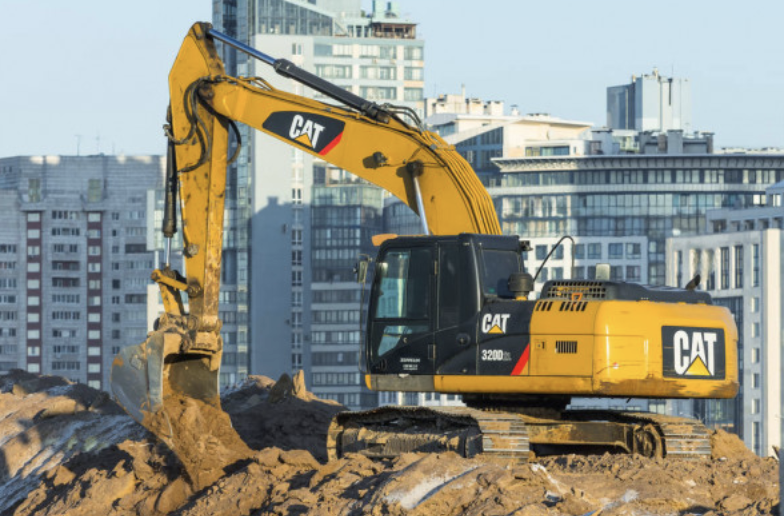
The company’s 40 percent year-to-date gain through the start of Thursday’s session, combined with the 160 percent gain over the trailing 12 months, illustrates how completely Caterpillar has been rerated as a beneficiary of the AI infrastructure construction cycle, with the company’s excavators, loaders, and energy systems increasingly understood as the physical layer that makes the digital economy’s expansion in data centre construction practically possible.
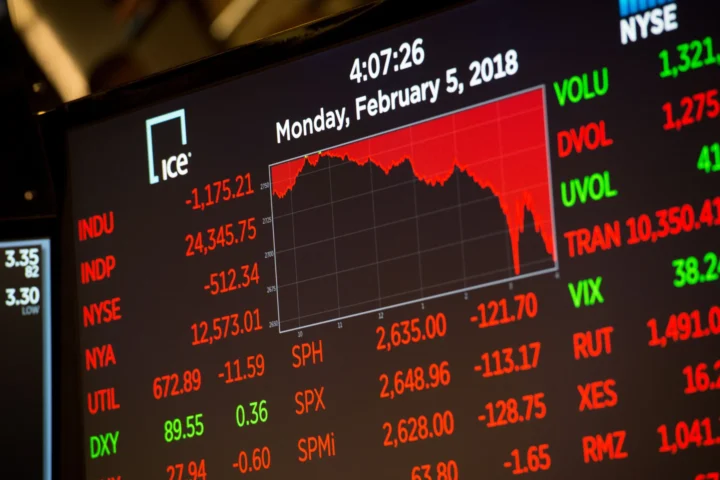
Thursday’s Caterpillar-led Dow gain of 790 points was the single largest index move of the week, contrasting with the more mixed reception that the Magnificent 7 earnings cluster received, and reflecting how the market allocated different weights to a company demonstrating physical demand in real orders versus technology companies projecting digital demand through backlog figures and AI adoption metrics that require more interpretive work.
The guidance raise, with Caterpillar now expecting higher sales and revenue in Q2 year-over-year, adds forward validation to a quarterly beat that could otherwise have been dismissed as a one-period anomaly, and positions the company to continue delivering against the elevated expectations its stock price has embedded across a period of extraordinary outperformance relative to both the industrial sector and the broader S&P 500.
The S&P 500 closed Thursday at 7,209.01, its first close above the 7,200 threshold, while the Nasdaq added 0.89 percent to close at a new record of 24,892.31, with both indices finishing the month of April on a notably strong note after Caterpillar’s construction demand signal provided a counterweight to the more complicated read from the software and cloud earnings that had dominated the prior 24 hours.
Caterpillar is widely used by economists and investors as a bellwether for global industrial and construction activity precisely because its equipment is involved in the early physical stages of virtually every major infrastructure programme, making its order book a leading indicator of where capital spending intentions will eventually translate into revenue for the wider supply chain.
The Iran war has been a dual-edged factor for Caterpillar specifically: higher oil prices have compressed discretionary construction spending in some markets while simultaneously driving investment in energy infrastructure, pipeline rehabilitation, and the kind of industrial resilience projects that become strategic priorities when energy supply disruptions create economic uncertainty at scale.
Q2 earnings are scheduled for late July, and the most important variable between now and then is whether the backlog strength translates into sustained order flow or whether the combination of elevated financing costs and geopolitical uncertainty begins to cause customers to defer equipment purchases that the current order book suggests they have already committed to.